Category: National news

SMEG Tour Competition shortlist

The first stage of judging for the 2016 SMEG Tour Competition has concluded.

‘The shortlist represents a diverse range of innovative kitchen designs and use of SMEG appliances across varied spaces, including multi residential, alts & adds as well as a striking new build’ states SMEG’s Paul Enright.

 Balmain Cottage by Sam Crawford Architects
 Elizabeth Bay Apartment by TFAD
 Tivoli House by lava
 Tempe Crescent House by Silvester Fuller
 Valley House by Philip M Dingemanse
 Viking by Crown by MHN Design Union
 Weir Residence by Weir and Phillips Architects

2015 NT and ACT Architecture Award Winners

Mon 22 Jun

Both the NT and ACT Chapters have held their presentation evenings to announce the winners of the 2015 Architecture awards.

At the NT Awards was held on Friday 12 June in Darwin. The Northern Territory focused on the revitalisation of Alice Springs’ CBD by Susan Dugdale and Associates, with the project taking out the top honour of the night. See the complete list of winners here.

Over in the capital on Friday 19 June, heart and home reigned supreme with The NewActon Precinct by Fender Katsalidis Architects being awarded the Canberra Medallion, as well as accolades across Heritage, Interior Architecture, Sustainable Architecture, Urban Design and Art, making it the most awarded project of the night. To view the complete list of winners click here.


NORD Architecture Drawing Prize winner

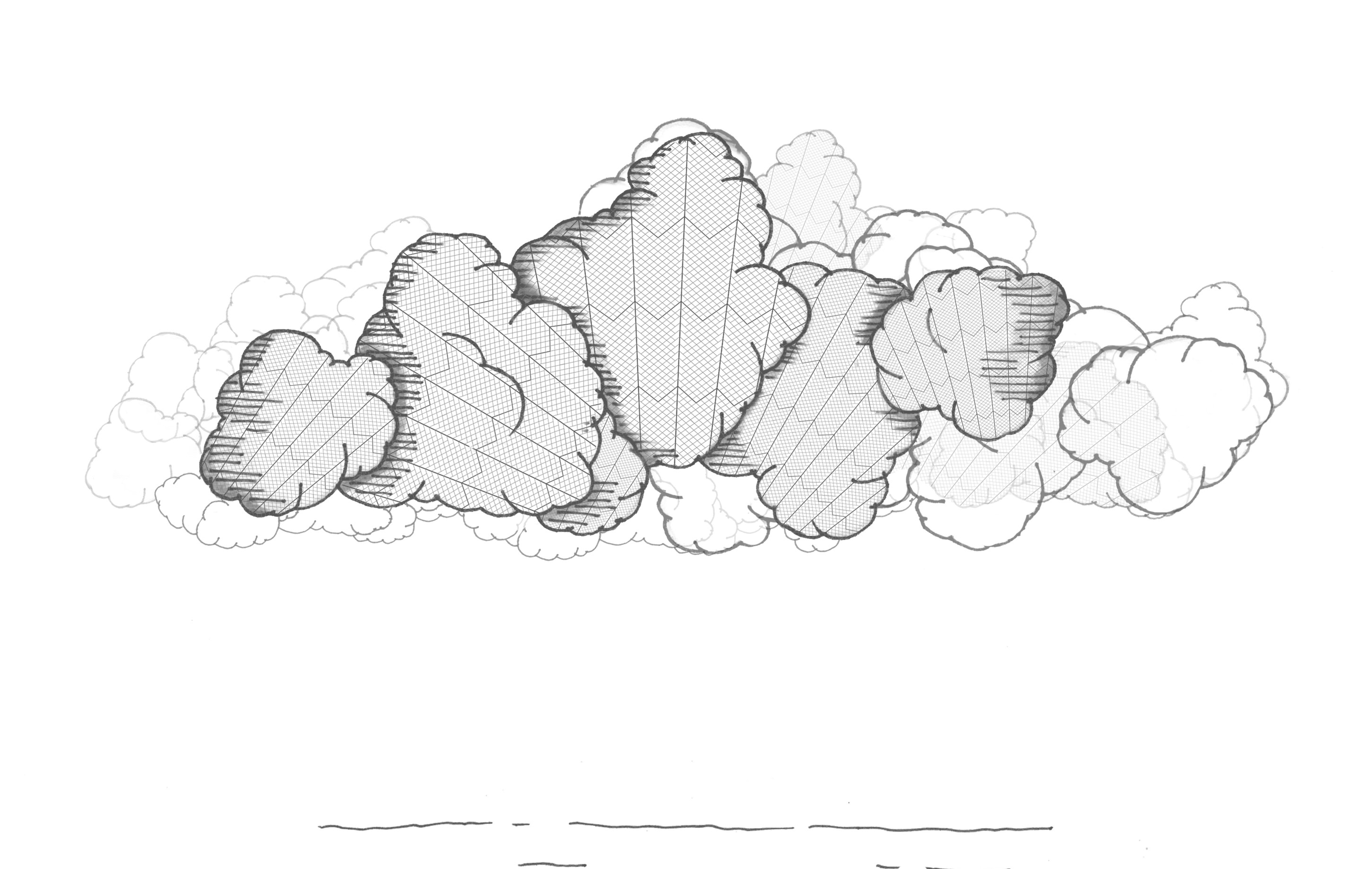
The winner of the NORD Architecture Drawing prize has been announced. Brad Mitchell, a student architect from Techne Architecture and Interior Design taking out the competition with his drawing ‘Gathering thoughts, layer and fluctuate in memory’.

Nord_Brad Mitchell

“Gathering thoughts, layer and fluctuate in memory and new encounters. Jorn Utzon’s legacy provides a cross hatched environment of a Danish and Australian architectural relationship. Utzon strived for contrast. “The difference in character of the two components forming the building, the massive and imposing base, and the light and graceful shells on top of it…” However the tensions in the architecture provide a graceful connection to site, harbour and water. Clouds, of water, cycle as ocean and as vapour, but are the same in components. Utzon’s cities, Copenhagen and Sydney, are connected to and by water.

The drawing was created digitally using hand drawn elements that were layered and folded into a form. Pattern hatches were added to strengthen the relationship to Utzon’s architecture.”

– Brad Mitchell 


Jury Citation – Shaun Carter

“Sydney is a city located on water. Copenhagen too. Both are sailing cities. Utzon’s love of sailing was widely known. The sight of a sail under load vividly reminds us of the sails of the Opera House. All angles offset by the organic curve of natural forces.

Mitchell’s ephemeral “clouds” floating above water is a delightfully evocative image of infinite responses.  Clouds and water, elements as common as they are fundamental, remind us that we are each bound by the same finite earth. Distant but connected.

We find Mitchell’s work dances beautifully between the joy and playfulness of whimsy and the strength of a single image that sits in the imagination like a persistent friend, inviting our curiosity.  This is what we seek in a drawing. Compelling us to look for answers and finding great satisfaction in what we think is our “knowing”, irrespective of whether this is truly Mitchell’s intent.

This is the power of singular drawing to conjure up numerous responses, but instantly linking the disparate ideas of Sydney, Copenhagen, and our shared loves and common bonds, and the architecture and the people that has inextricably links us forever. This is what the competition was about, and Mitchell’s beautiful work is a great example of this.”

– Jury members Shaun Carter (President NSW Chapter) Carterwiliamson Architects Sydney & Edmund Capon, Chair of the Foundation, and who was Director of the Art Gallery of NSW for 33 years

The (Real) Cost Of Unpaid Internships

It can be tempting, in tough economic times, to think that putting interns or work experience students to work is a savvy way of giving your business a competitive advantage. This is a questionable, and very risky, business strategy. A manager might even think that offering the intern a longer-term work experience opportunity is mutually beneficial. Such arrangements can be unlawful and readily fall foul of the Commonwealth Fair Work Act 2009. In recent years, unpaid work arrangements such as internships and work experience has come under scrutiny, particularly by the Fair Work Ombudsman (the FWO).

Case note: ’Meet the Gang’ – the FWO prosecutes unlawful internships

A recent case heard and decided in the Federal Court highlights the legal risks and the financial consequences of not making sure that your student or graduate employment arrangements comply with employment laws and staff entitlements.

The FWO prosecuted a media company, which services the film and television industry, for failing to pay the minimum wage to two university students it had hired as interns. The students initially offered and worked for three weeks’ unpaid work experience. During that time they did productive, ‘hands on’ work in the business. After those three weeks, they were then employed as casual staff on specific projects as ‘volunteers’ or ‘contractors’. The company also reimbursed the students for their expenses, but it didn’t give them pay slips for their time worked, nor did it pay them the minimum wage.

The FWO investigated the matter. The company, probably on very sensible legal advice, decided to co-operate with the FWO’s investigation and quickly admitted that it had failed to pay the students the minimum wage. It then took steps to pay them the full amount owing to them. So far, this cost the business $22,168.08, plus the cost of getting employment law advice. The company also had to admit that the expenses allowed to the students could not be offset and let the students keep the $17,720 in expenses they had reimbursed. A further loss.

But the FWO was still concerned about the bigger picture and wanted to send a clear, public message as a deterrent to all businesses that this kind of unlawful employment behaviour is not acceptable. The FWO argued there was a strong public interest to take this matter to court and sought an order from the Federal Court for penalties against the business. The court agreed. It found that the students were employees and that the company had failed to pay minimum wage entitlements and casual loadings, failed to pay wages in a timely way and failed to give pay slips. These were all breaches of the company’s employer obligations under the Fair Work Act.

The court then ordered the company to pay $24,000 as penalties for these breaches. The maximum penalty the court could have ordered, in these circumstances, was $115,500. In addition, the court was also scathing of the company’s employment practices, saying it was: ‘at best, dishonourable to profit from the work of volunteers, and at worst, exploitative.’ In fairness, the court did recognise the remorse, early admissions and co-operation the company displayed during the investigation and in acting quickly to pay the students’ entitlements in full. For those reasons, the court leniently discounted the total penalty it would otherwise have awarded.

The official bill was $63,888.08. But this doesn’t account for the cost to the business of getting employment law advice and the time cost of co-operating with the investigation and the time and legal cost of a Federal Court hearing. Finally, what’s the intangible cost of reputational damage to your business in your industry and as an employer in the labour market? As the court put it: ‘this arrangement has cost [them] considerably more than would have been the case had minimum wages been paid to employees.’

Altogether, a very expensive exercise in ‘cheap labour’.

See: Fair Work Ombudsman v Crocmedia Pty Ltd [2015] FCCA 140 (29 January 2015)

Recommendations

If you have a student or graduate in your practice who engages in work of a kind that is, in effect, an ‘employment relationship’ then that person is likely to be an employee of the business under the Fair Work Act 2009. All employees are entitled to:

In the architectural profession, the Architects Award 2010 will apply to all your student, graduate and registered architect employees.

Unpaid arrangements can be lawful. The Fair Work Act allows for ‘vocational placements’ which must meet strict criteria. For an architect in practice offering internships and vocational placements to a student can be a rewarding exercise for all involved, but must be entered into lawfully and for the right reasons.

The likely costs and penalties of breaches of the Fair Work Act are high and the above case is a warning that the courts and the FWO are intent on deterring and penalising bad employment behaviour. If you have engaged graduates or work experience students, or are planning to, you should get employment law advice to make sure your current and all proposed arrangements are lawful and are properly vocational placements under the Act. Could your business afford not to?

More information

If you are unsure about the nature of the arrangements or work that your work experience student or graduate is doing in your practice, you should get general industrial advice from an HR consultant or preferably specialist legal advice from an employment lawyer. If you have access to Acumen, you can try one of the law firms on the Free Legal Reference Service.

For more general information see the Fair Work website fact sheet on unpaid work.

New agreement between Australia, NZ and Canada

A new agreement between Australia, New Zealand and Canada means experienced registered architects can be recognised in all three countries.

Australian architects have always travelled and worked abroad, some establishing remarkable, long-term international careers, others gaining experience elsewhere before returning to practice in Australia. In turn, Australian architecture is enriched through the presence of practitioners from many other countries.

Despite this international flow, it has not always been easy to gain formal recognition of skills, experience and education in different jurisdictions. A new trilateral agreement between Australia, New Zealand and Canada means that achieving such recognition just got a lot simpler.

The agreement – signed by the Architects Accreditation Council of Australia (AACA) on 18 February 2015, at Parliament House in Wellington, New Zealand – enables the mutual recognition of experienced registered architects in all three countries.

Richard Thorp, President of the AACA, comments, Architects Accreditation Council of Australia President Richard Thorp said: “We are very pleased to have implemented an agreement under APEC with our New Zealand and Canadian colleagues that will facilitate mobility of architects across our respective economies. We anticipate great interest from architects in all three countries as the trilateral agreement offers significant opportunities for architects and benefits for our respective economies.”

The AACA encourages Australian architects to explore the potential of the agreement, noting that Canada has a much lower proportion of architects per capita than Australia.

The agreement also provides a base for further collaboration between Australia, New Zealand and Canada. The AACA is now working with the registration boards of New Zealand and Canada to identify further opportunities – for example, to facilitate the movement of architectural students and graduates between the three nations.

This new agreement follows similar arrangements already established with Japan and Singapore. The AACA is now also working with the National Council of Architect Registration Boards in the US with the aim of reaching similar arrangements with the majority of jurisdictions in the US by the end of 2016.

These agreements are all developed within the broader framework of the APEC Architect, a register that facilitates the access of registered APEC Architects to independent practice within the Asia-Pacific region.  There are currently 27 architects on the Australian APEC Architects Register, and the AACA encourages all Australian architects to investigate the opportunities and to consider becoming an APEC architect.

Find out about requirements for APEC architects and download the application form at the AACA website.


Further info: mail@architects.nsw.gov.au.  0400 564 936


BACKGROUND

APEC Architect


The APEC Architect framework is a direct response to the commitments of the Asia Pacific Economic Cooperation (APEC) to reduce regulation and thereby enable reciprocal agreements between member economies.


Countries participating in the APEC Architect framework are:

  • Australia
  • Canada
  • People’s Republic of China
  • Hong Kong China
  • Japan
  • Republic of Korea
  • Malaysia
  • Mexico
  • New Zealand
  • Republic of the Philippines
  • Singapore
  • Thailand
  • United States of America

Membership renewals comp 2015

We are delighted to announce the winners of the membership renewals comp.

Membership Fee Refund

Nic Papas
Bradley Trott
Alida Natoli
Railene Geddes
Ferencz Baranyay

$100 Architext Book Voucher

Natalie Fan
Alex Smith
Chim Koon Lim
Tony Quinn
Michael Harbour

National Seminar Series Double Pass

Ron Jee
Colin Wilson
Funmilayo Ogunjobi
Jensen Ong
Carolyn McLean

Continuum Pass

David Whitfield
Craig McLeod
Peter Vaughan
Mark Haywood
Ian Pellant
Michael Dickson
Oggie Latinovic
Genevieve Lilley
Pritt Chakraborty
Tieran Kimber

Congratulations!

There is still time …
For those of you who haven’t had a chance to renew yet, there is still time. Simple visit the renewals page for all the details.


Ian Athfield lives on in his work

Renowned New Zealand architect Sir Ian Athfield died on Friday 16 January in Wellington. He was 74.

In a career spanning half a century, Sir Ian had a huge impact on New Zealand architecture and on the profession, his influence felt across the country, and all around the world.

He was founder of Athfield Architects Limited and one of New Zealand’s leading exponent of modernist architecture. His best-known works included the Wellington City Library, built as part of the Civic Square redevelopment in the 1980s, and his own sprawling Khandallah house. He also designed Jade Stadium in Christchurch, which was damaged in the February 2011 earthquake.

Sir Ian was a former president of the New Zealand Institute of Architects and a recipient of the NZIA gold medal for career achievement.

Less than a month ago, his knighthood was announced in the New Year’s Honours.

All of us at the Australian Institute of Architects send our deepest condolences to his family and friends.

A public memorial service to celebrate Sir Ian’s life and work of will be held at 3pm, Sunday 1 February, in Civic Square, Wellington.

Urban Design Protocol editorial board

Urban Design Protocol Editorial Board

We are currently seeking expressions of interest from members to represent the Institute on the Urban Design Protocol editorial board. The editorial board will provide ongoing supervision and quality control of the website www.urbandesign.org.au with a view to this becoming a self-sustaining resource that is kept current with contemporary projects.

About the Urban Design Protocol

In 2011 the Australian Government released ‘Creating Places for People: An Urban Design Protocol for Australian Cities’, following consultation with all three levels of government, industry and professional associations and community organisations. The Protocol was developed as a web-based resource with a range of supporting and related material.  It is intended that the urbandesign.org.au website be the central, national resource for the Protocol and for urban design research, information, policy and discussion.

Recently the Australian Department of Infrastructure transferred custodianship of the Urban Design Protocol to the Australian Sustainable Built Environment Council (ASBEC).  ASBEC is the peak body of key organisations committed to an efficient, productive and sustainable built environment in Australia. ASBEC, of which the Institute is a member, consists of industry and professional associations, non-government organisations and government observers who are involved in the planning, design, delivery and operation of our built environment, and are concerned with the social and environmental impacts of this sector.

About the Urban Design Protocol editorial board

It is intended that the editorial board be supported by a cross section of industry representatives. The work of the editorial board will not be resource intensive but an ongoing interest and oversight will help ensure that the website is maintained and kept current with contemporary projects.

It is anticipated that the editorial board will meet via teleconference 3-4 times per year.

Institute representation

Expressions of interest are sought by 30 January 2015 from Institute members with relevant experience, who can contribute to a national conversation about urban design. It is expected that the selected Institute representative will consult with their Institute peers as appropriate when providing input to editorial board issues, and will liaise with relevant Institute staff on a regular basis.

Click the link below to apply.

EOI form Urban Design Protocol editorial board


It’s architecture for the people at the 2014 National Architecture Awards

Community-oriented projects have dominated the Australian Institute of Architects’ 2014 National Architecture Awards, announced Thursday 6 November at a ceremony hosted by Myf Warhurst at the Darwin Convention Centre.

Projects honoured include a housing project with an emphasis on communal spaces, a mental health facility with a welcoming domestic feel, a primary school that provides a sanctuary for the culturally diverse local population and a pro bono surf club that celebrates the coastal features and protects an adjacent fairy penguin habitat.

In 2014, a total of 43 awards and commendations were given to 36 projects across the 12 national categories. The jury selected the winners, with each state and territory represented, from the 153 eligible projects that progressed from the Architecture Awards held by each chapter earlier in the year.

The jury, led by Immediate Past President Paul Berkemeier, was particularly impressed with the volume and calibre of public buildings in this year’s crop.

‘It is encouraging that so many projects embodied best practice with informed clients, effective procurement methods, appropriate funding models and intelligent architecture. This provides us with great optimism for the future of our public spaces – an area that has so often delivered dispiriting outcomes,’ Jury Chair Paul Berkemeier said.

UQ Advanced Engineering Building by Richard Kirk Architect HASSELL Joint Venture, took out the Public Architecture category winning the coveted Sir Zelman Cowen Award in addition to the Emil Sodersten Award for Interior Architecture and an Award for Sustainable Architecture – making it the most awarded project of the night.

‘The architects have taken an extremely complex program – including teaching spaces, a 500-seat auditorium, laboratories, research facilities and office spaces – and resolved a building that is not only exciting to inhabit, but also a delightful space to occupy,’ the jury said.

For the first time the Residential – Houses category was divided into two: new builds, and alterations and additions. House at Hanging Rock by Kerstin Thompson – ‘a house nestled into a steep slope and seamlessly integrating stringent bushfire requirements’ – secured the Robin Boyd Award for Residential Architecture – Houses (New). The inaugural Australian Institute of Architects Award for Residential Architecture – Houses (Alterations and Additions) was presented to WA practice Philip Stejskal Architecture for Bellevue Terrace Alterations + Additions.

Breathe Architecture received two Named Awards for its Melbourne project The Commons: the Frederick Romberg Award for Residential Architecture – Multiple Housing and the David Oppenheim Award for Sustainable Architecture.

Another big winner on the night was the Prince Alfred Park + Pool Upgrade by Neeson Murcutt Architects in association with City of Sydney, which was presented with the Walter Burley Griffin Award for Urban Design and an Award for Public Architecture. ‘This is a beautifully resolved urban project that skilfully integrates architecture, landscape and urban design, bringing vibrancy and new life to the city,’ the jury noted.

A beautifully designed boatshed and surf lifesaving club for the local community of Bicheno on the east coast of Tasmania by Birrelli art + design + architecture emerged as the clear winner of the Nicholas Murcutt Award for Small Project Architecture.

Reflecting on his jury experience, Paul Berkemeier commented ‘the number of new faces and emerging practitioners that we met, as well as the large number of women architects was a source of optimism. It was also wonderful to see so many clients who were thrilled by what their projects have delivered.’

Winners image gallery.

Client and jury videos of Named Award winners.

Commercial Architecture

The Harry Seidler Award for Commercial Architecture

• White Bay Cruise Terminal – Johnson Pilton Walker (NSW)

National Awards for Commercial Architecture

• 8 Chifley Square – Lippmann Partnership/Rogers Stirk Harbour & Partners (NSW) • Bread in Common – spaceagency (WA)

National Commendation for Commercial Architecture

• Prahran Hotel – Techne Architects (Vic)

Enduring Architecture

The National Enduring Architecture Award • CB Alexander College, Tocal – Ian McKay and Philip Cox, Architects in Association (NSW)

Heritage

The Lachlan Macquarie Award for Heritage

• Eternity Playhouse – Tonkin Zulaikha Greer Architects (NSW)

National Commendation for Heritage

• Former Police Station, 127-129 George Street, The Rocks – Welsh + Major Architects with Sydney Harbour Foreshore Authority (NSW)

Interior Architecture

The Emil Sodersten Award for Interior Architecture

• UQ Advanced Engineering Building – Richard Kirk Architect HASSELL Joint Venture (Qld)

National Awards for Interior Architecture

• Bread in Common – spaceagency (WA)

• Garangula Gallery – Fender Katsalidis Mirams Architects (NSW)

• Hotel Hotel – March Studio (ACT) • Sustainable Industries Education Centre – MPH Architects + Architectus in association (SA)

International Architecture

The Jørn Utzon Award for International Architecture

• Stonehenge Exhibition + Visitor Centre – Denton Corker Marshall (United Kingdom)

Award for International Architecture

• Shelter@Rainforest – Marra + Yeh Architects (East Malaysia)

Public Architecture

The Sir Zelman Cowen Award for Public Architecture

• UQ Advanced Engineering Building – Richard Kirk Architect HASSELL Joint Venture (Qld)

National Awards for Public Architecture

• Australian PlantBank – BVN Donovan Hill (NSW)

• Dallas Brooks Community Primary School – McBride Charles Ryan (Vic)

• Dandenong Mental Health Facility – Bates Smart Whitefield McQueen Irwin Alsop Joint Venture (Vic)

• Prince Alfred Park + Pool Upgrade – Neeson Murcutt Architects in association with City of Sydney (NSW)

• UTAS Institute for Marine & Antarctic Studies – John Wardle Architects + Terroir, in Association (Tas)

National Commendations for Public Architecture

• North Bondi Surf Life Saving Club – Durbach Block Jaggers in association with Peter Colquhoun (NSW)

• South Australian Health and Medical Research Institute – Woods Bagot (SA)

Residential Architecture – Houses (Alterations and Additions)

The Australian Institute of Architects Award for Residential Architecture – Houses (Alterations and Additions)

• Bellevue Terrace Alterations + Additions – Philip Stejskal Architecture (WA)

National Award for Residential Architecture – Houses (Alterations and Additions)

• West End Tower – Owen and Vokes and Peters (Qld)

National Commendation for Residential Architecture – Houses (Alterations and Additions)

• Strohmayr House – Troppo Architects (NT)

Residential Architecture – Houses (New)

The Robin Boyd Award for Residential Architecture – Houses (New)

• House at Hanging Rock – Kerstin Thompson Architects (Vic)

National Award for Residential Architecture – Houses (New)

• Oxlade Drive House – James Russell Architect (Qld)

National Commendations for Residential Architecture – Houses (New)

• Hover House – Bower Architecture (Vic) • Southern Outlet House – Philip M Dingemanse (Tas)

Residential Architecture – Multiple Housing

The Frederick Romberg Award for Residential Architecture – Multiple Housing

• The Commons – Breathe Architecture (Vic)

National Award for Residential Architecture – Multiple Housing

• UNSW Kensington Colleges – Bates Smart (NSW)

National Commendation for Residential Architecture – Multiple Housing

• Gantry – Bates Smart (NSW)

Small Project Architecture

The Nicholas Murcutt Award for Small Project Architecture

• Bicheno Surf Life Saving Club + Boathouse – Birrelli art + design + architecture (Tas)

National Awards for Small Project Architecture

• Balmain Apartment – Durbach Block Jaggers (NSW) • Kew Studio – Sean Godsell Architects (Vic)

National Commendation for Small Project Architecture

• Studio 217 – Amalie Wright & Richard Buchanan (Qld)

Sustainable Architecture

The David Oppenheim Award for Sustainable Architecture

• The Commons – Breathe Architecture (Vic)

National Awards for Sustainable Architecture

• Australian PlantBank – BVN Donovan Hill (NSW)

• The Wayside Chapel – environa studio (NSW)

• UQ Advanced Engineering Building – Richard Kirk Architect HASSELL Joint Venture (Qld)

Urban Design

The Walter Burley Griffin Award for Urban Design

• Prince Alfred Park + Pool Upgrade – Neeson Murcutt Architects in association with City of Sydney (NSW)

National Award for Urban Design

• GASP! Stage 02 – Room 11 (Tas)

COLORBOND® Award for Steel Architecture

The National COLORBOND® Award for Steel Architecture

• White Bay Cruise Terminal – Johnson Pilton Walker (NSW)


2014 Jury Paul Berkemeier – Immediate Past President, Australian Institute of Architects and Principal, Paul Berkemeier Architects (Jury Chair) Clare Cousins – Director, Clare Cousins Architects Justin Hill – Director, Kerry Hill Architects Virginia Kerridge – Principal, Virginia Kerridge Architect Lindy Johnson – Director, Lindy Johnson (Lay Juror)

Queensland home gets popular vote

A consummate Brisbane home is the winner of the People’s Choice Award, part of the Australian Institute of Architects’ 2014 National Architecture Awards.

Oxlade Drive House by James Russell Architect was selected by voters from the 13 houses shortlisted in the National Awards’ Residential Architecture categories.

The simple, practical design appealed to voters for its indoor/outdoor layout and its clever response to local insect life – a full shade cloth screen encasing the courtyard spaces, allowing views out and only light in.

Oxlade Drive House_James Russell Architect_Images-Toby Scott
Oxlade Drive House by James Russell Architect. Images: Toby Scott.

In awarding Oxlade Drive House at the Queensland Architecture Awards earlier in the year, the state jury noted it was ‘an intelligent, appropriate reinterpretation of the possibilities of inner city living. A robust and unexpected series of devices and palette of materials engage the senses and heighten the connection between the inside and out. A provocative, poetic but practical outcome, testament to James’s discourse of living in the sub-tropics’.

More than 4000 votes were received for the inaugural People’s Choice Award, which provided the public with an opportunity to engage with the National Awards and the work of Australian architects.

Voters also had the opportunity to give the reasons for their selection (in 25 words or less) for a chance to win some great prizes including a Dulux Colour Consultancy and Paint Package.

Winners of the prizes will be announced in the coming weeks, with entries spanning the 13 projects and many emphasising their appreciation of the value of good design in the home.

The winners of the National Awards will be announced at a ceremony in Darwin on Thursday 6 November.