Category: SA enews

From the Chapter President – 19 September 2016

David_Homburg_150pxSince 2009 (the period of Professor Laura Lee’s residency), the Institute here in South Australia has been pressing for policy makers and others to better utilize the skills that we have as a profession, and utilize them earlier in the decision making process.

It’s been a long process, with plenty of setbacks along the way. And to be honest, until recently the outsider’s view of the profession has remained static – that we are the people to bring in once things are settled and there is a clear outline of what’s required, and we are commissioned to get on with designing a building for our clients.

For that matter, far too many architects subscribe to that view as well.

But in the last couple of months, I’m sensing real change. Our lobbying is gaining traction.

It started with a lunch with the Treasurer back in May where he was interested in how we can influence the supply chain here in South Australia, and how we should be involved early in the development of projects. See May’s e-News here

Ian Nightingale, the Industry Participation Advocate, has since taken carriage of this topic, holding a series of workshops with Institute members to better understand how our decisions influence the supply chain. The conclusion from these workshops has been clear – the earlier we can get involved in a project, the better the outcome will be for the state economy.

At the same time, the Department of Planning, Transport and Infrastructure (DPTI) has been talking to the Institute to understand how the project procurement process can run more smoothly. Their issue has been that the briefs they receive from their respective agencies are not always fully formed, often missing the strategic opportunities, and they continue to have cost, time and quality issues on projects.

And they have acknowledged, and in fact asked, that we think about how we might help them guide the agencies for better considered briefs – in other words get us involved earlier in the process.

Lastly, after nearly two years of hard work, we have secured seed funding from the Department of State Development and the Department of Premier and Cabinet to establish the Adelaide Design Alliance. That funding was secured as a result of demonstrating the value that we brought as designers in developing export strategies in several sectors including Aged Care and Water Sensitive Urban Design (for more on the ADA see this e-News here)

Again, it’s a case of getting us involved early, bringing our design skills to the table to guide up front decisions and carve out new opportunities for our economy.

Its great news – the doors are opening. But are we ready for the potential opportunities it brings?

Can each of us walk into a room full of business analysts, economists, bureaucrats and experts and convince them to think about their issues differently?

Can we move past the idea that the solution is always going to be a building? Can we move beyond trying to reclaim the past and look to the future?

Will we say to a potential client that their brief is misguided and they need to totally rethink the issue?

And do we all have the skills to guide them through a rethinking process and really deliver value for them?

These are all fundamental questions. If your answer is ‘yes’, that’s excellent. If you’re not sure, read on.

At his closing address at April’s Institute National Conference ‘How Soon is Now’, University of Minnesota academic and architect Thomas Fisher delivered an address that mapped out a world where design and designers can be pivotal in unlocking some of the complex issues that we face as a community.

He has subsequently released a book “Designing our Way to a Better World”. In it, he describes numerous scenarios where architects can expand the value we bring to our societies. Many of them involve moving beyond the way that we traditionally have thought about design – that is the creation of physical things of great style and beauty.

Hand in hand with creation of physical space should be the creation of new ways of delivering services and operations – the ‘software’ systems to the ‘hardware’ of architecture. The idea is that a building is only part of the solution – it’s not the whole solution. And sometimes the building may not be the solution at all. Instead, we might just need to change the ‘software’.

In his introduction Thomas Fisher makes the following remark:

“Most designers have paid relatively little attention to the design of what we cannot see and have continued to pursue work in, give awards to, and largely focus on the world of physical design, despite the increasingly competitive nature of traditional design practice.”

I spoke to him over a drink after the conference and outlined some of the things the Institute has been doing here in South Australia to change this. He was intrigued to hear about them, and encouraged us to continue along a path that not many were yet on. In this path lies the potential for new business models, and new arenas in which we can deploy our skills.

So when the time comes – and it is coming – when we are invited into the formative discussions on a particular issue, we should think about stepping outside the business-as-usual ways we view our services. The goal here is as it has been throughout my term as President – to increase our relevance as a profession, and to grow the areas in which we can practice.


Informing Practice Through Research

informing


Informing Practice through Research

Last Wednesday the SA Chapter held the Informing Practice through Research Forum.  The forum was the most recent activity undertaken by the Academic/Practice Work Group, which aims to increase the collaboration between research and practice.

So why is research relevant in practice?  Every architecture project is a prototype.  In order to design architects must develop an understanding of the client’s requirements, the site, the regulatory parameters and the technical factors relevant to the project and resolve this information into a design response.  All of this is research, albeit very project specific and focused research.  Definition of problems and resolution of problems are integral to the practice of architecture as well as are inherent aspects of research.

Having agreed that all architects undertake research in some form, the forum considered the barriers to pursuing further research activity in practice.  The primary reasons identified was the lack of available time.  Given the pressures on the profession at the current time undertaking research may appear to be an unrealistic luxury.  However, if pursuing research adds value to projects and provides a point of difference in the marketplace then research can be viewed as an investment in the future of the profession and a means of improving business viability.
Research enables design thinking to be underpinned by evidence thereby gaining credibility with clients and the wider community.  By engaging with research architects can move beyond instinct and unsubstantiated observation to build a compelling, evidence based case for design decisions.  In a society that values certainty and wants innovation while simultaneously seeking to minimise risk, having an evidence based approach is a powerful value add.

The process by which practice can interact with academics and engage with research was also discussed.  Suggestions ranged from an informal conversation to embedding researchers within projects or practitioners within research teams.  Grant types and the different avenues for that they present for collaboration between academia and practice were also explained.

Opportunities for engaging with current research to inform project decisions, test outcomes and validate design decisions were also discussed.  The range and relevance of the research activities currently being undertaken at both universities was highlighted during brief presentations from some of the academics present at the forum.  Yes, some topics are highly conceptual and theoretical, but many are focused on issues faced by practice.  And while the practically focused research may appear easier to apply in a practice context, the conceptual may inspire practice to explore different methodologies and invigorate their design thinking.  ARM is a prime example.

So, how can links between practitioners and academics be improved?  Increasing the understanding of how practice and academia work and who is involved in particular types of activity is a vital first step in achieving this aim.  Forums are one way to achieve this.  Practitioners participating in sessional teaching, critiques and other activities within universities is another example.  The Academic/Practice Work Group and future Forums will explore others.

A register of academics and their areas of research was also discussed.  This would be beneficial for improving knowledge of the research resource available.  Practitioners could also be listed on the register to indicate areas of practice specialisation.  The register would be provide a first point of reference for both practice and academia to identify potential collaborators.  It would enable academics to access projects to test and validate their research and practitioners to inform research topics and access specialist knowledge.  The key will be to develop a platform that is easy to access and maintain.

South Australia is a small and connected community.  We have the ideal environment for fostering collaborative enterprise.  This provides us with a fantastic opportunity to develop a mutually supportive relationship between practice and academia that will grow the capacity and the capability of the architecture profession.

The Forum was sponsored by Boral, who are a long term partner of the SA Chapter.   We thank Boral for their ongoing support for the architecture profession.

Written by Nicolette Di Lernia
SA Chapter Manager

From the Chapter President – 17 August 2016

David_Homburg_150px

Chapter President’s message

There has been a lot going on since my last e-News in late June, just prior to the awards (including me taking a couple of weeks off followed by National Council, which in part explains my absence from these pages of late).

First of all, thanks to all of you who responded to my call for better membership participation at the awards. We’ve had over a dozen responses to date, and it would be great to see more. For those of you who’ve shown interest in helping out with some of our activities, we’ll be in touch soon. If you are still thinking about it, please give the Chapter Office a call.

The Department of Premier and Cabinet (DPC) is hosting a 10 day program in October called Open State which includes the return of the Festival of Ideas, now being run outside of government.

We have been invited by DPC to host one of the day long sessions on the theme of Future Cities. The program is being formulated at the moment, but it’s great to see that the role of architects in shaping our cities is being recognized at the highest level of our government. See https://openstate.com.au/about-open-state/ It’s also worth noting that cities will be a theme that will be pursued more generally by our new National President Professor Ken Maher.

The Department of Planning, Transport and Infrastructure (DPTI) is in the middle of revamping its procurement processes. It would be fair to say that there has been a fair bit of concern in the profession around what the new format might look like. However the discussions in which several of us have been involved with senior DPTI staff indicate that they are looking to a meaningful engagement with us to get the right results.

We are working closely with the ACA and Consult Australia in engaging with DPTI, and will keep you informed of developments.

It is also worth mentioning that this conversation is running in parallel with discussions we are having with the Industry Advocate, Ian Nightingale, on getting value for our economy from government spending. For those of you who may not have seen the reference in Hansard to a recent speech that Treasurer Koutsantonis delivered on this subject, see here

And finally, earlier this month we hosted the first of what will be a series of forums between the profession and our two universities, looking at how we can work more closely together. Around 50 people attended which was great to see, although I’d have to say not many attendees were those who own practices – from what I could tell, with a few notable exceptions, it was mainly staff!

And there was also a notable lack of small practitioners as well.

This is a really important initiative that needs to be supported by the people that run and own practices, small as well as big. It goes to the heart of what we’ve been focusing on since I took up this role – increasing the relevance of our profession.

Research and practice go hand in hand. Indeed, we all do research in some form as we do our jobs on a daily basis. The ability to give it strength through stronger ties with the university sector cannot be overstated. It has the capacity to provide a strong foundation to our profession, and our ability to argue the case for quality design through an evidence base.

Our next event in the series will look in more detail at what types of research we can do together. So when you see the invitation come across your computer, think seriously about attending.

David Homburg, SA Chapter President

From the SA Chapter Manager

SA_Chapter_Manager_Nicolette_160px

8 Aug

The SA Chapter of the Institute has been actively engaged in discussions with DPTI regarding their review of government procurement processes over the last 12 months. In conjunction with the ACA we have been meeting with DPTI representatives, providing feedback regarding the systems that currently exist and responding to proposed amendments. The focus has been on prequalification systems, consultant tendering processes and project procurement methodology. Recent changes to the consultant tender documentation that includes clearly stated weighting for each of the tender criteria has been one outcome from this process to date.

Last week DPTI released a discussion paper regarding the review of the prequalification system as well as a draft of the amended AS4122 contract for review and comment.
The Institute’s legal counsel is currently reviewing the draft AS1422 contract and comment will be provided to DPTI and members when it is available. Planned Cover are also providing comment from an insurance perspective. In addition, Hassell, Cox and GHD/Woodhead have sought legal/insurance opinions and have agreed to share their findings, which will enable us to provide a comprehensive response.

The ASA has prepared a survey focused on the prequalification system. DPTI’s prequalification system is used by government and non-government agencies and, when working effectively, should make the tender process less onerous for consultants and recognise performance. Follow this link to the survey, we encourage you to provide a response. The more responses received the greater the credibility of the response that can be provided to DPTI.

The SA Chapter extends its thanks to all of the members who are participating in this important work. Government in the key procurement agency for architectural services in South Australia and as such influences the whole sector. Therefore, this is an issue that affects the profession as a whole, regardless of whether you do government projects or not.

SPACE: Tours through Architecture – Now part of OPEN STATE October 22-23

SA_open-state_560

The Australian Institute of Architects, SA Chapter is proud to announce an open-house event, SPACE: Tours through Architecture which will be run as part of Open State this year.

The specialist focus tour program offers unique access to a diverse range of buildings and spaces recently completed by South Australian Architects. Projects are selected from entrants in the annual South Australian Architecture Awards program, which represent leading architecture work in Public, Commercial, Education, Residential, Interiors, Small Projects, Heritage and Urban Design.

Tour Format
The success of the program depends entirely on your participation. Work with us to provide this unique access to your recently completed project. Call now!

  • Architects- you will be required to volunteer your time to present two (2) tours on the project. The tour duration may vary depending on the size of the project but suggest one-hour maximum
  • The group size will be limited to no more than 20 people
  • Entry is by ticket only and SPACE volunteers will available on the day to look after the guests during the tour


Contact Gillian Redman-Lloyd via email or phone 8402 5912.
Find out more about Open State festival and Festival of Architecture and Design.

SA Chapter Manager’s Report

25 Jul

SA_Chapter_Manager_Nicolette_160px

David Homburg would ordinarily have prepared a piece for this E-News. However, as he has been enjoying some much deserved time with family over the school holidays and is currently at the National Council meeting, I am writing in his stead.

I want to start by thanking all of you who responded to the premises survey. The feedback has clearly identified that the following are clear priorities:

  • The premises needs to be of high architectural merit and communicate the value of architecture
  • A strong public presence is valued
  • A central location is important to support member access and public engagement
  • Meeting/function space is required

This confirms the discussions that have taken place at Chapter Council and will inform the ongoing search for our new home. Those people who indicated that they would like to participate in the premises focus group will be contacted soon.

A few responses also raised the potential of co-locating with other architecture and design peak bodies. The Institute has a collaborative relationship with allied member organisations. A number of Institute initiatives including FAD and the Adelaide Design Alliance have been established as collaborative platforms for the development and promotion of the design sector.

However, it is fair to say that many of the allied member organisations do not have the capacity of the Institute and are generally not in a position to support the premises and staff resources that Institute members enjoy. This will limit the opportunity to share premises, although we are not ruling this out as an option should the right circumstances arise. Whatever the outcome, the SA Chapter will continue to work closely with the design sector to build cross-disciplinary collaboration, enhance understanding of the value of design and to promote the value of architecture.

On David’s return next week I look forward to hearing about the National Council meeting. It is an important meeting from my perspective for two reasons.

Firstly, this meeting marks the transition from the existing structure to the new National Council / Board structure adopted at the Annual General Meeting. It will enable National Council to concentrate on strategic issues to a much higher degree and will provide the capacity for the Institute to address the significant issues facing the profession in a more focused manner.

Secondly, the meeting is addressing key issues regarding accreditation of schools of architecture. Significant changes to the accreditation system have been occurring over the last two years, with the implementation of the new National Standard of Competency for Architects about through a revised accreditation procedure likely to occur in 2017. This is a critical moment for the Institute to clearly define its position and to advocate for world class, best practice architectural education. A strong education system is vital to the future of the profession and worth our full support.

From the Chapter – Mon 11 July 2016

SA_Chapter_Manager_Nicolette_160px

It is with considerable sadness that I announce that Kara Growden has resigned from the Institute.  She will be leaving on Friday 15th July to take up a position with the Office for Strategic Engagement in the Department of Premier and Cabinet.

Kara has been instrumental in the successful delivery of a range of programs during her three years with the SA Chapter as well as providing support for the Chapter Council and Education Committee.  As is the case for the Institute at large, many of you will be unaware of the breadth of activity that Kara has been engaged in.  So here is a quick overview.

Media and Communications were two core aspects of Kara’s role and she has worked hard to develop relationships with media organisations, grow the coverage of architecture in the media and provide a pathway for publication of opinion pieces written by members.  Kara has also developed a communications plan for the Chapter and generated regular member communications plus promotional material for events and program.

Public programs has been another key aspect of Kara’s role.  She has made significant contributions to events such as FAD and Design Conversations, which raise public awareness of architecture and promote the value of design.  Kara’s energy, creativity and passion for excellent design have been a great asset in bringing these programs to fruition.

These qualities have also been vital in relation to the SA Awards.  Kara has been a driving force behind the successful delivery of this multifaceted and complex program, including managing the entries, coordinating juries and site visits and ensuring media coverage.  In addition, she has worked closely with Gillian and other staff to organise and deliver the public jury presentations and the Awards presentation event plus follow on programs.  This has enabled this member focused program to be expanded so that it also communicates the value of architecture to a wider public audience.

So, as you can see, we will be looking for a very special candidate to fill her position.  We will miss her cheerful presence as well as her professionalism, organisation and efficiency.  Her absence will be particularly evident over the next few weeks, when was also have Zaf on leave.  So, in the interim, please be patient with the SA Chapter as we endeavour to keep all of the wheels of this big rig in motion.

Please join us in wishing Kara all the best as she moves to this next phase in her career.   Send an email to sa@architecture.com.au, visit the office or join us for a drink at Udaberri from 4:00pm on Friday 15th July.

Awards honour the social, economic and cultural benefits of architecture in SA

The diversity of projects being undertaken by architects in South Australia, who are responding to the challenges of today and needs of tomorrow, will be honoured at the Australian Institute of Architects’ 2016 SA Architecture Awards held on Saturday 2 July at the 2015 architecture award-winning Adelaide Oval.

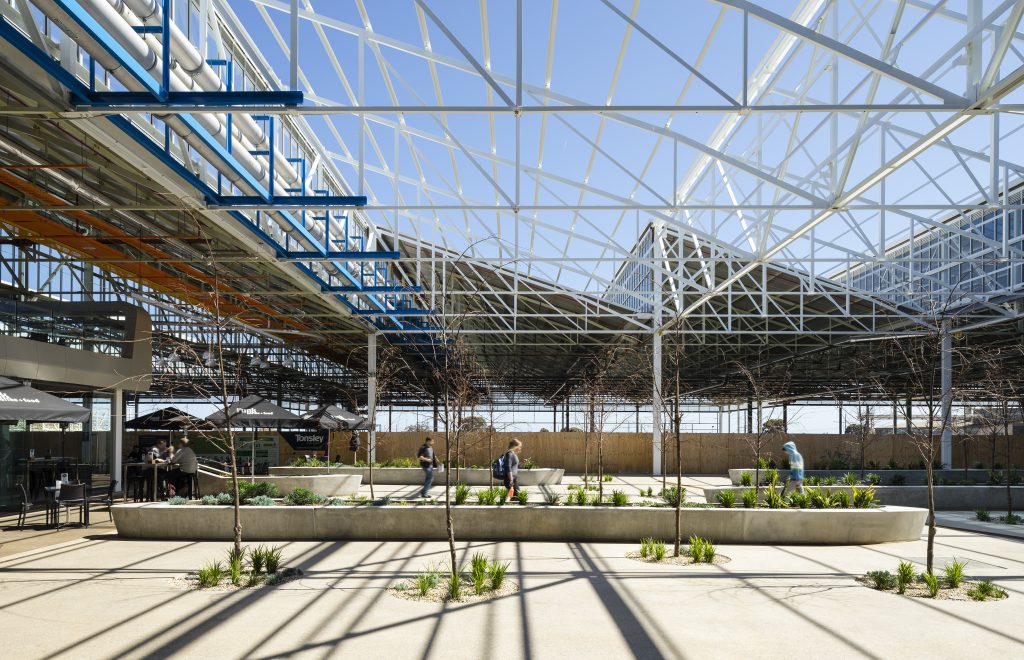
Four projects from the Tonsley redevelopment have collected seven Awards across education, heritage, commercial, sustainability and urban design, cementing the project as a ‘unique place with a strong identity for South Australia to celebrate its manufacturing history’. See below for full list of award winners.

The role of architects Woods Bagot and Tridente in deciding to retain the Main Assembly Building (MAB) structure and surrounding building pods along with vibrant urban spaces designed by Oxigen, ‘is testament to both the vision of the client, the skills and collaboration of the designers and the urban design guidelines developed for the site,’ the jury said.

Sustainable Architecture Award - Tonsley Main Assembly Building and Pods by Woods Bagot and Tridente Architects. Photo by Sam Noonan.
Sustainable Architecture Award – Tonsley Main Assembly Building and Pods by Woods Bagot and Tridente Architects. Photo by Sam Noonan.


South Australia’s Drill Core Reference Library by Thomson Rossi provides an important gateway to the huge 61-hectare Tonsley site, which is currently transforming into an education, research and business hub. HASSELL’s Flinders University building further defines the former MAB along with the TAFE campus to the south.

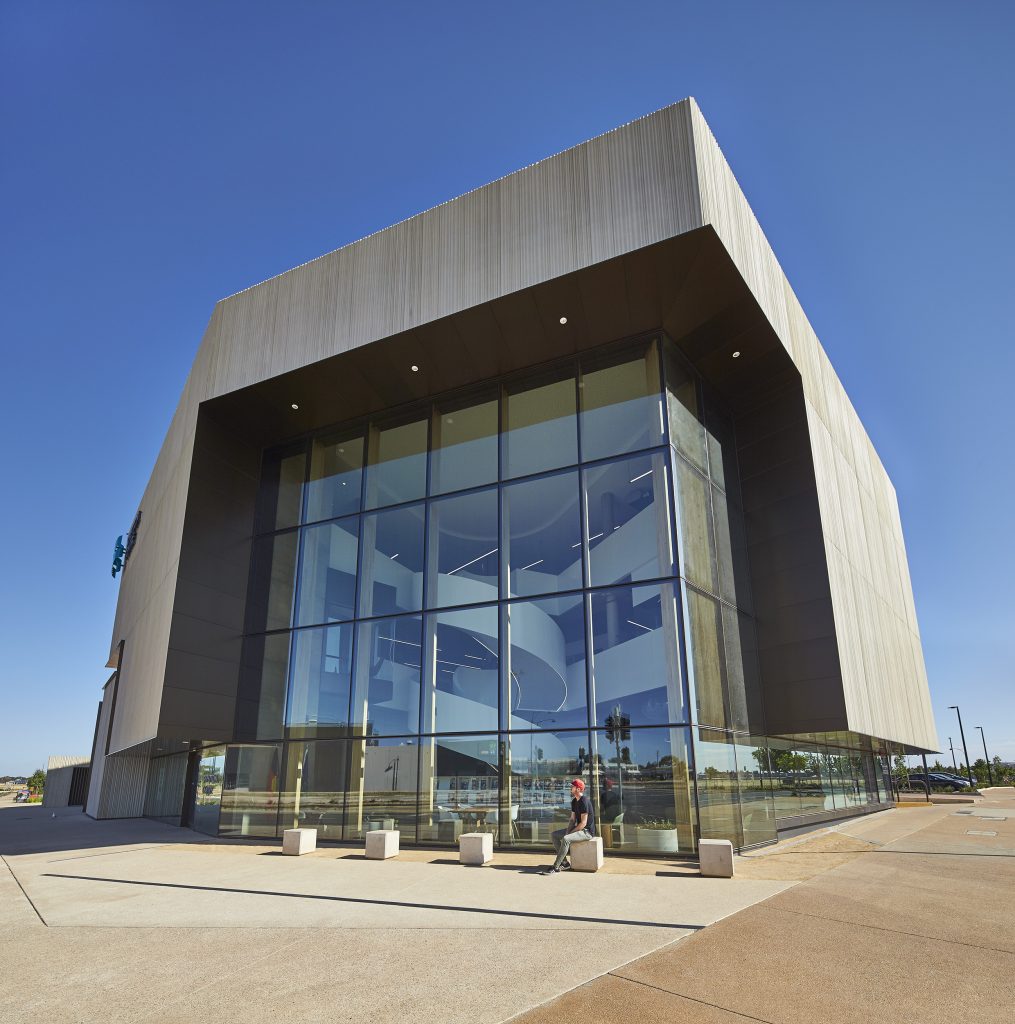
Public architecture was dominated by projects that provide significant social and cultural benefits to our communities with the integration of public spaces becoming integral to the design process. The coveted Jack McConnell Award for Public Architecture, is awarded to the Stretton Centre by HASSELL, which the jury praised as ‘an architecturally accomplished focal point for the wider northern suburbs community’.

Continuing the accolades for projects in the public realm, commendations were awarded to Henley Square Remade by TCL with Troppo Architects, Glenunga Community Hub by Greenway Architects and the Zoos SA Nature’s Play Ground by Phillips/Pilkington Architects and WAX Design, which also won the community’s vote for the City of Adelaide Prize People’s Choice Award.

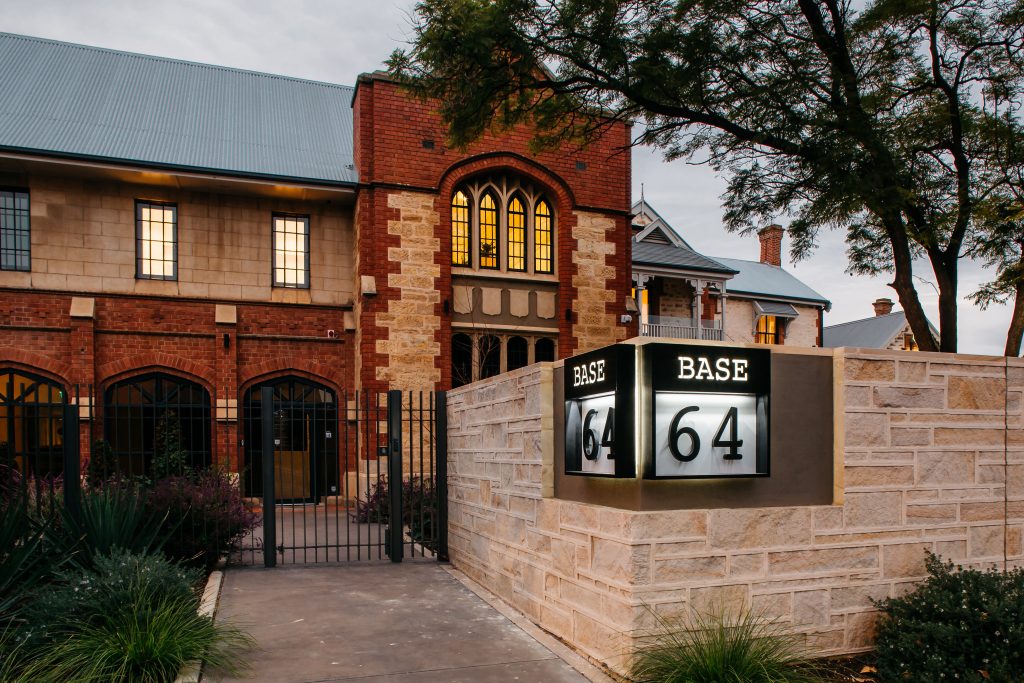
The new technology incubator, Base 64 in Kent Town was designed by Williams Burton Leopardi within a heritage building, and has been honoured with both the Keith Neighbour Award for Commercial Architecture and David Saunders Award for Heritage.

‘Base 64 has a unique quality that is difficult to define — part co-working, domestic, gallery, retreat and public space. It provides clues as to how contemporary workplaces might evolve to be more collaborative, networked, and personal,’ the jury said.

Commercial Architecture Keith Neighbour Award - Base 64 by Williams Burton Leopardi. Photo by Christopher Morrison.
Commercial Architecture Keith Neighbour Award & David Saunders Award for Heritage – Base 64 by Williams Burton Leopardi. Photo by Christopher Morrison.


The latest in residential design incorporates clean, modern design, ample natural light, access to outdoor spaces and solid environmental approaches, with five accolades given in the New Houses category.

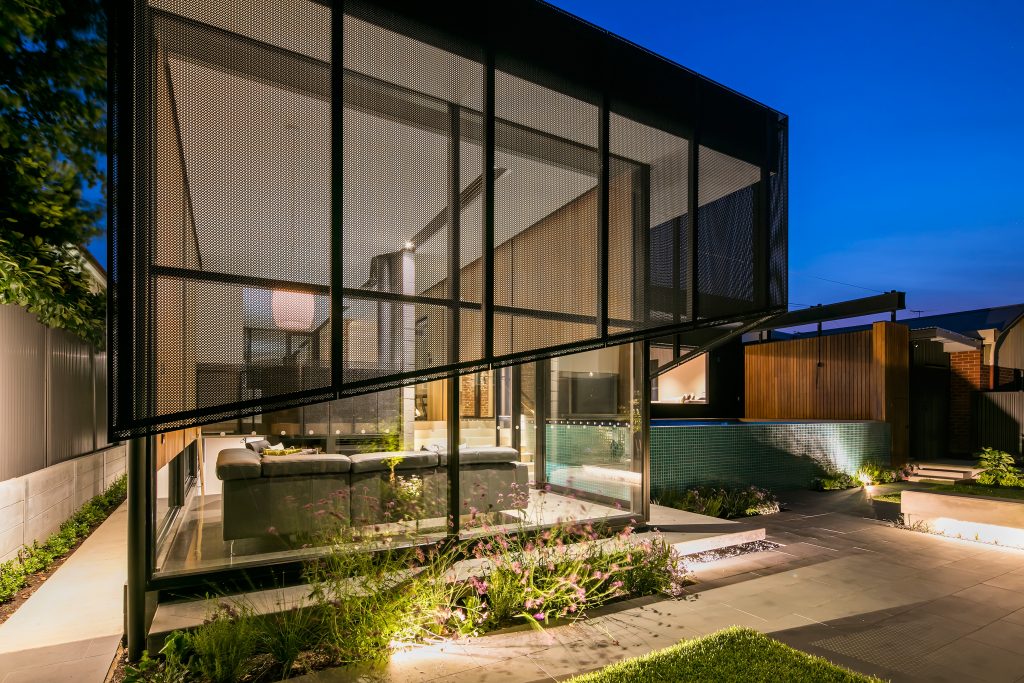
Veil and Mortar by Khab Architects, ‘a playful and dramatic addition to a symmetrical cottage’, was awarded the top honour for Residential Architecture – Houses (Alterations and Additions), the John Schenk Award. The Jury was impressed with all entries in the category this year, showcasing the value architects bring when responding to the needs of their client in adapting an existing home.

The Small Project category celebrates areas of design that may be traditionally overlooked, pavilions and shelters, to public toilets. A 10sqm home study addition by Grieve Gillett Anderson received the top Marjorie Simpson Award for Small Project Architecture by the jury, who said the project ‘embodies a real joy in architectural outcomes and contributes to a broader approach to residential design’.

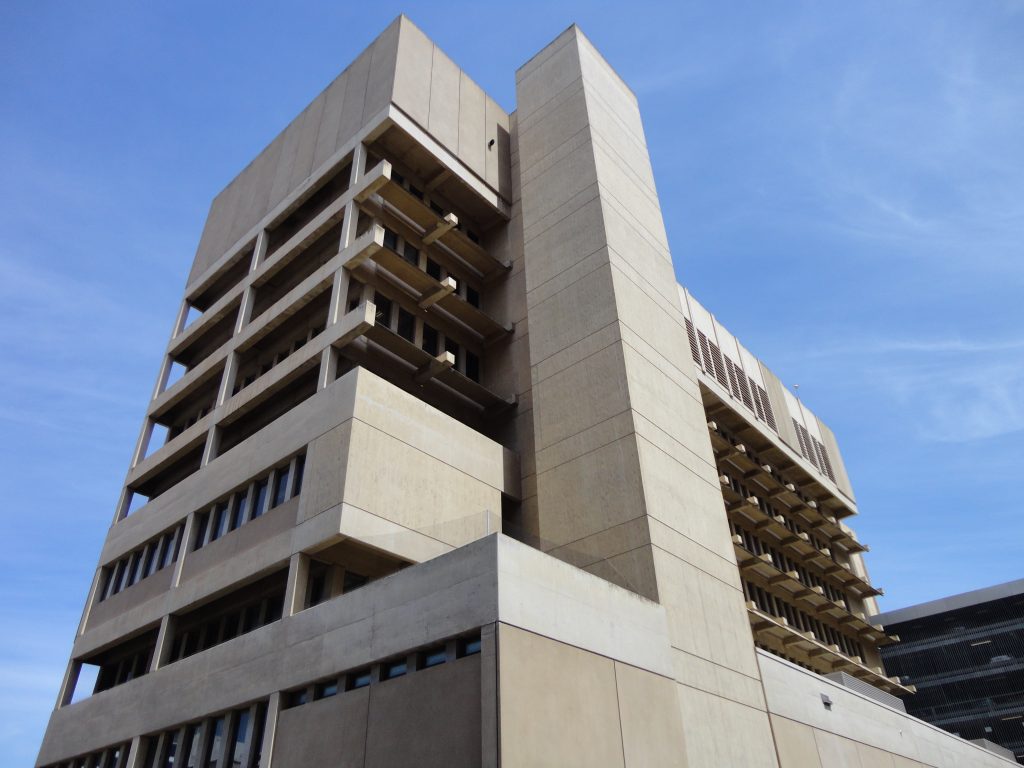
As the profession currently speculates the future of architecture. The Jack Cheesman Award for Enduring Architecture recognises a significant building over 25 years. This year the South Australian Forensic Science Centre by the SA Public Buildings Department, has been honoured as a distinguished example of late Australian brutalism.

Full list of winners:

Public Architecture
Jack McConnell Award – Stretton Centre by HASSELL
Commendation – Glenunga Hub by Greenway Architects

Public Architecture - Jack McConnell Award - Stretton Centre by HASSELL. Photo by Peter Bennetts.
Public Architecture – Jack McConnell Award – Stretton Centre by HASSELL. Photo by Peter Bennetts.


Educational Architecture
Dr John Mayfield Award – Flinders at Tonsley by HASSELL
Commendation – Cardijn College Music Centre by Tridente Architects


Residential Architecture – Houses (New)
The John S Chappel Award – West End Residence by Ashley Halliday Architects
Award – Tusmore Residence by Grieve Gillett Andersen
Award – Grass Trees by Max Pritchard Gunner Architects
Commendation – Friedrichstrasse House by Troppo Architects
Commendation – Waitpinga Retreat by Mountford Williamson Architecture


Residential Architecture – Houses (Alterations & Additions)
The John Schenk Award – Veil and Mortar by KHAB Architects
Award – Fade to Grey by Grieve Gillett Andersen
Commendation – LOCH by John Adam Architect
Commendation – Cawley Tree House by C4 Architects

Residential Architecture – Houses (Alterations & Additions) - The John Schenk Award - Veil and Mortar by KHAB Architects. Photo by Aaron Citti.
Residential Architecture – Houses (Alterations & Additions) – The John Schenk Award – Veil and Mortar by KHAB Architects. Photo by Aaron Citti.


Residential Architecture – Multiple Housing
Commendation – Gibson & 7th by Williams Burton Leopardi


Commercial Architecture
Keith Neighbour Award – Base 64 by Williams Burton Leopardi
Award – South Australian Drill Core Reference Library by Thomson Rossi
Commendation – Beresford Wines Cellar Door & Tasting Pavilion by Alexander Brown Architects


Heritage
David Saunders Award – Base 64 by Williams Burton Leopardi
Award – Tonsley Main Assembly Building and Pods by Woods Bagot and Tridente Architects
Commendation – Torrens Island Quarantine Station by Habitable Places
Commendation – Saint Francis Xavier Cathedral Pipe Organ Project by Grieve Gillett Andersen


Interior Architecture
Robert Dickson Award – Oggi by studio-gram
Award – UniSA Student Lounge by Phillips / Pilkington Architects
Award – Centre for Senior Learning, Pulteney Grammar School by Walter Brooke & Associates
Commendation – Elders Head Office by JPE Design Studio

Interior Architecture Robert Dickson Award - Oggi by studio-gram. Photo by David Seivers.
Interior Architecture Robert Dickson Award – Oggi by studio-gram. Photo by David Seivers.


Urban Design
Commendation – Riverbank Bridge by Tonkin Zulaikha Greer, Taylor Cullity Lethlan and Aurecon
Commendation – Tonsley by Oxigen
Commendation – Henley Square Remade by T.C.L with Troppo Architects


Small Project Architecture
Marjorie Simpson Award – House on Mayfair by Grieve Gillett Anderson
Award – 4 Structures at Henley Square by Troppo Architects and T.C.L
Commendation – Waterfall Gully Shelter and Toilet Block by Flightpath Architects


Sustainable Architecture
Award – Tonsley Main Assembly Building and Pods by Woods Bagot and Tridente Architects
Award – Tonsley by Oxigen


Enduring Architecture
Jack Cheesman Award – South Australian Forensic Science Centre by SA Public Buildings Department, Government of South Australia

Enduring Architecture Jack Cheesman Award - South Australian Forensic Science Centre by SA Public Buildings Department, Government of South Australia. Photo by Michael Queale.
Enduring Architecture Jack Cheesman Award – South Australian Forensic Science Centre by SA Public Buildings Department, Government of South Australia. Photo by Michael Queale.

Colorbond® Award for Steel Architecture
Award – South Australian Drill Core Reference Library by Thomson Rossi


The City of Adelaide Prize
Prize Winner – Pink Moon Saloon by Sans-Arc Studio
Commendation – Zoos SA Nature’s Play Ground by Phillips/Pilkington Architects and WAX Design

Fielders Roofing and Walling Manual

second pageWith over 115 years’ experience in the building construction industry, Fielders take pride in delivering strong customer service in line with their continual development of innovative roofing and walling products to both the commercial and residential markets.

The growing range of Fielders roofing and wall cladding products have been used on many of Australia’s most iconic buildings from the SCG, Adelaide Oval, Sydney’s White Bay Cruise Terminal, and Adelaide’s award winning SAHMRI building.

The multiple applications available across the extensive roofing and wall cladding range allow architects and builders the flexibility to create truly amazing and inspirational projects, which combine function and design to achieve amazing results.

IMG_0942

To aid in these results, Fielders have created a Roofing and Walling manual reference document to help guide architects, engineers, contractors and builders in the design and installation for the entire Fielders roofing and wall cladding range. Featuring information on product selection, installation guides, material specifications, design spans and limits, maintenance and care, as well as the associated fasteners and accessories, the Fielders Roofing and Walling Manual is a one stop guide for your complete roofing and wall cladding needs.

Fielders recently updated the Manual to now include all technical aspects of their increasingly popular Fielders Finesse product range. The Finesse range offers versatile, innovative and striking roofing and wall-cladding options available in a range of Colorbond® finishes, with five striking profiles making up the Finesse range. Consisting of Interlocking Panel, Nailstrip, Shadowline 305, Neo Roman and Millenium, each façade profile has a unique aesthetic appeal adding the finishing touch to commercial and residential buildings alike.

Click here to discover the Fielders Roofing and Walling Manual now: http://bit.ly/1qcGUHT

DSC_0213

DSC_0116

From the Chapter President – Tue 28 Jun

David_Homburg_150pxLast night at our Chapter Council meeting we ended up devoting a portion of the meeting to how we might better engage with you the membership, and increase membership participation in the Institute here in South Australia.

Some initiatives get great membership engagement and are obviously of value, others not so much. It is something that has been a continuing topic of conversation over the six or so years that I have been on Chapter Council, and no doubt prior to that as well.

So while not a specific item on last night’s agenda, we all agreed that it is a perennial issue that requires more attention.

As a result, we are going to spend some time at our next meeting on Monday 25 July devoted specifically to this topic. But in order for it to be an effective discussion, we need your input.

Our annual Awards night is being held this Saturday evening. It is the one time each year when we get a large part of the profession together to celebrate our achievements for the year. And it is the one time each year where we can readily engage with a large group of members.

Most of the Chapter Council will be attending the awards, so I’d encourage you to spend five minutes chatting to them as well as me about how we can better engage with you, and what might increase your participation in Chapter activities. For instance, what might get you to events and forums, or what might lead you to become an active member of a task group, standing committee or nominate for Chapter Council.

And if you don’t know who your Councillors are, I’ll be inviting them onto the stage during my speech, so seek them out for a chat at some point during the course of the evening. Our ability to serve you as members can only be as good as the feedback that we get.

Of course, if you are not attending the awards on Saturday night, it isn’t the only opportunity for feedback – feel free to get in contact with the Chapter office anytime by phone 8402 5900 or email sa@architecture.com.au sometime before 22 July to provide your input for discussion in our meeting.

David Homburg, SA Chapter President