Category: Tas enews

Vale Professor John Webster FRAIA

It is with sadness that we mark the passing of Professor John Webster FRAIA, who died suddenly last Wednesday.

John had a distinguished career as an architect, planner and academic and made a sustained contribution to the education of architects and planners in Tasmania over several decades, as well as being a well-known fellow of the Institute.

After qualifying as an architect and town planner, John worked in local government and private practice in Britain. In 1975 he was invited to establish a permanent office in Canberra, on behalf of Holford Associates, initially working in private practice before moving to the academic sphere in Canberra and Tasmania. In 1981 he became the head of the School of Architecture and Planning in its various forms in Launceston during the 80s and 90s, and was made a fellow of the AIA in 1983. He then became involved in campus planning for the University of Tasmania before retiring from that role and turning his attention to the planning system.

He was an emeritus professor of the University of Tasmania as well as being an occasional delegate of the Tasmanian Planning Commission and a member of the Resource Management and Planning Appeals Tribunal, being awarded a fellowship by the Planning Institute Australia in 2013.

John’s family have invited members of the Institute to help celebrate John’s life by attending his wake on Thursday, January 25th, between 2 and 4pm at the Design Centre Tasmania, cnr of Brisbane & Tamar Streets, Launceston.

From John’s son, Ralph:
All are welcome to the wake and in true Dad style, the more the merrier. We would be honoured to have any of his colleagues and friends from the AIA attend to join my family to celebrate Dad’s life. For those unable to attend but who would still like to mark Dad’s passing, we’d love stories or messages to be sent, so that they can be included in the remembrance book – please no flowers though (send to: Wendy Webster, 1 Richards Ave, Newstead, Tas, 7250). Or if they would rather make a donation on John’s behalf, then a contribution to Beyond Blue would be most welcome.

The Institute sends its condolences to John’s family and friends.

Tas Job opportunity: Architects Designhaus

Logo

Mon 25 Jul, 2016

Architects Designhaus are seeking an Architect or an experienced graduate of at least five years’ experience to join a small team delivering a range of small to large and complex projects across multiple sectors.

The successful applicant will able to produce clear and accurate construction documentation using a 3D BIM application and will have a good grasp of technical detailing and construction systems. Experience with Autodesk Revit is very important for this role although applicants with equivalent BIM experience will be considered.

The applicant must be enthusiastic and driven to learn new skills. Contract Administration and experience with professional image applications such as Photoshop and Indesign are also desirable.

Please send applications to andrewmc@architectsdesignhaus.com.

Tourism and community projects win at 2016 Tasmanian Architecture Awards

Tourism projects and community buildings were big winners at the Australian Institute of Architects’ 2016 Tasmanian Architecture Awards announced in Hobart tonight. 

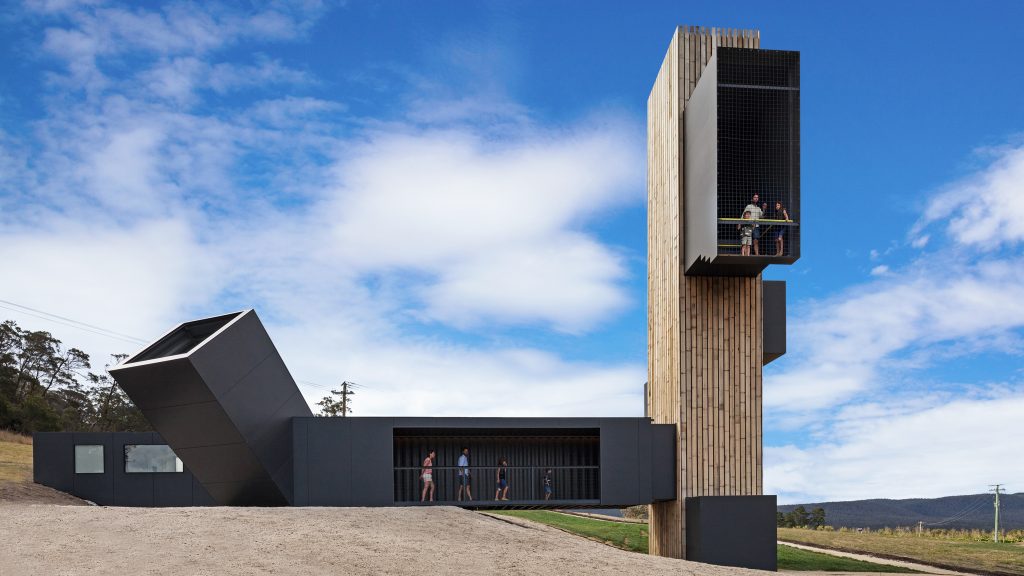
This year’s awards demonstrate the important role that architecture plays in Tasmania’s booming tourism economy. Tourism-focused projects to win awards include Cumulus Studio’s striking Devil’s Corner cellar door and lookout at Bicheno; JAWS Architects’ Three Capes Track Cabins, which provide stunning views from their sensitive positioning atop the sea cliffs of the Tasman Peninsula; and Birrelli Art + Architecture + Design’s clever insertion of accommodation pods in the grounds of the heritage-listed Hatherley House in Launceston.

Colin Philp Award for Commercial Architecture - Devils Corner by Cumulus Studio. Photo by Tanja Milbourne.
Colin Philp Award for Commercial Architecture – Devils Corner by Cumulus Studio. Photo by Tanja Milbourne.

The President of the Tasmanian Chapter of the Australian Institute of Architects Brad Wheeler says this year’s entries also demonstrate the value architecture can bring to the community. ‘Tasmanian architects have a fantastic record designing award-winning buildings and spaces that benefit our island state’s communities, and this year is no exception. From student accommodation and facilities to sports pavilions and tourist attractions, architects have again helped to provide buildings and places that enrich all our lives and provide economic benefits for our state,’ said Mr Wheeler.

Winners in the community, public and education categories of the awards include Dock 4 Architects’ Clarence High School Sports Pavilion, Edwards + Simpson’s new community stadium in St Helens, and several University of Tasmania projects.

The residential architecture categories were again hotly contested. Archier won the pinnacle Esmond Dorney Award for residential architecture as well as the main prize for sustainability for their clever Five Yards House. Rosevear Stephenson also won two awards for their sensitive work transforming a Battery Point Georgian into a contemporary home. Stuart Tanner’s Dunalley House – a new build since the devastating 2013 fires – was recognised for its robust yet minimal design, and also took out the People’s Choice Prize.

The Hobart College at Mt Nelson won the Enduring Architecture Award for buildings over 25 years old, and Circa Morris-Nunn’s Mountain Retreat Medical Centre in South Hobart was awarded the prestigious John Lee Archer Triennial Prize for the best example of public and commercial architecture of the last three years.

There are three tiers in the awards hierarchy: a commendation, an award, and a pinnacle named award.

Commercial Architecture
Colin Philp Award – Devils Corner by Cumulus Studio
Award – Stornoway by 1+2 Architecture
Award – Three Capes Track Cabins by JAWS Architects


Educational Architecture
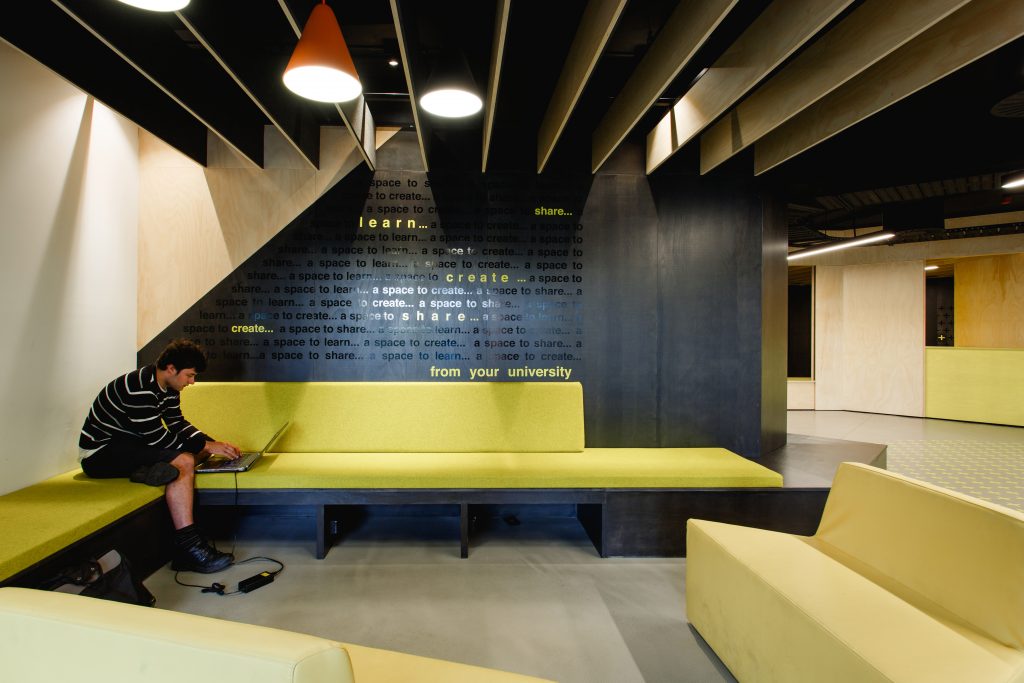
Tasmanian Chapter Named Award – The Student Lounge by Preston Lane

Educational Architecture Tasmanian Chapter Named Award - The Student Lounge by Preston Lane. Photo by Adam Gibson.
Educational Architecture Tasmanian Chapter Named Award – The Student Lounge by Preston Lane. Photo by Adam Gibson.

Heritage
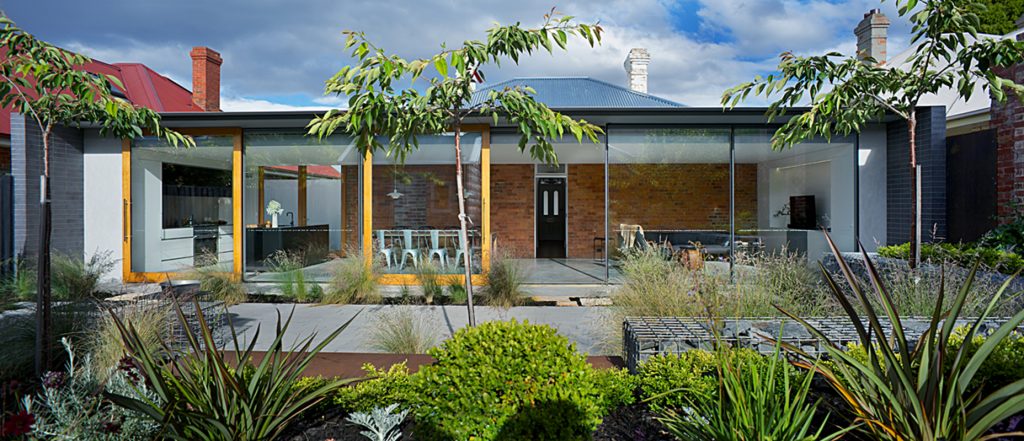
Roy Sharrington Award – Jenny’s House by Rosevear Stephenson


Interior Architecture
Award – Brickworks Design Studio by BYA Architects
Award – Stornoway by 1+2 Architecture


Public Architecture
Alan C Walker Award – Clarence High School Sports Pavilion by Dock 4 Architects
Award – Break O Day Community Stadium by Edwards + Simpson


Residential Architecture – Houses (Alterations and Additions)
Tasmanian Chapter Named Award – Jenny’s House by Rosevear Stephenson
Award – Sofia & Otto’s Playground by Gaetano Palmese Architects
Commendation – [re]barn by Circa Morris-Nunn

Residential Architecture – Houses (Alterations and Additions) Tasmanian Chapter Named Award - Jenny’s House by Rosevear Stephenson. Photo by Ray Joyce.
Residential Architecture – Houses (Alterations and Additions) Tasmanian Chapter Named Award – Jenny’s House by Rosevear Stephenson. Photo by Ray Joyce.

Residential Architecture – Multiple Housing
Award – Trinity Hill by HBV Architects w/ Carroll and Cockburn Architects
Commendation – Inveresk Residences by Morrison & Breytenbach Architects w/ Circa Morris-Nunn Architects


Residential Architecture – Houses (New)
Esmond Dorney Award – Five Yards House by Archier
Award – Dunalley House by STA Stuart Tanner
Commendation – Horse Shoe House by Preston Lane


Small Project Architecture
Peter Willmott Award – Hatherley Garden Pavilions by Birelli Art+Architecture+Design


Sustainable Architecture
Tasmanian Chapter Named Award – Five Yards House by Archier

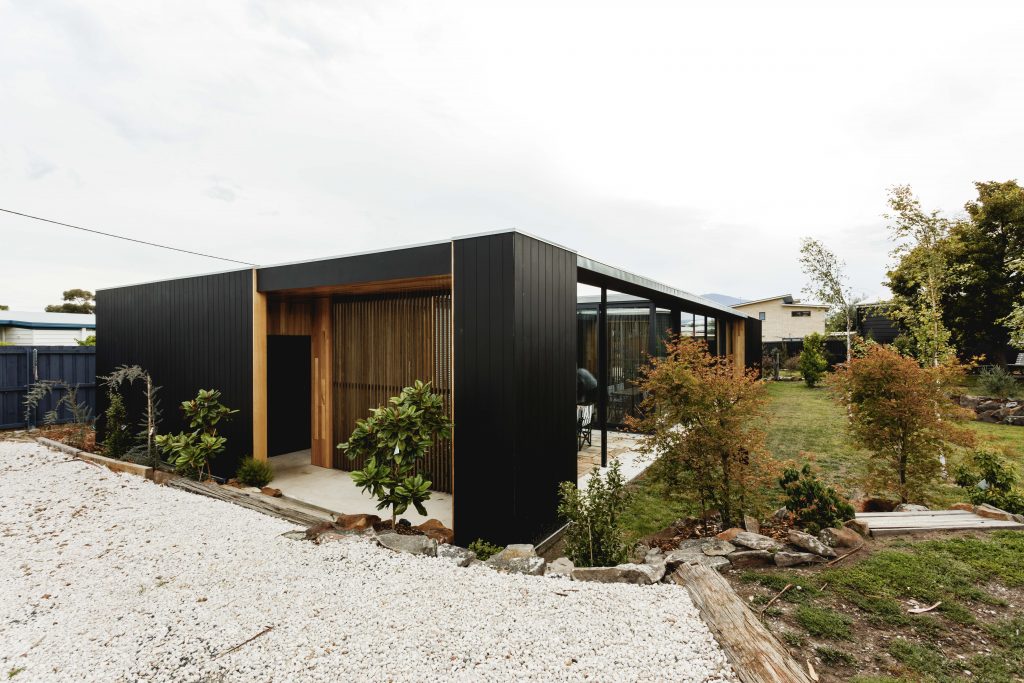
Residential Architecture – Houses (New) - Esmond Dorney Award - Five Yards House by Archier. Photo by Adam Gibson.
Residential Architecture – Houses (New) – Esmond Dorney Award – Five Yards House by Archier. Photo by Adam Gibson.

Enduring Architecture Award
Award – Resource Materials Centre by Tasmanian Government, Dept of Public Works, John Gott and Ben Ryan


COLORBOND® Award for Steel Architecture
Award – Devils Corner by Cumulus Studio


Additional Prizes
John Lee Archer Triennial Prize – Mountain Retreat by Circa Morris-Nunn
2015 President’s Prize – Richard Crawford by Architects Designhaus
Emerging Architect Prize – Bek Verrier, Preston Lane
SWT Blythe Student Prize – Sam Roberts, University of Tasmania

Contributing to communities – 2014 Tasmanian Architecture Awards

The 2014 Tasmanian Architecture Awards, announced tonight at MONA, have celebrated the contribution of architecture to the state’s communities from the small scale through to major urban improvements.

A highly valued contribution to Hobart’s public realm, UTAS Institute for Marine & Antarctic Studies (IMAS) by John Wardle Architects + Terroir, in association, was the big winner on the night, taking home two Named Awards and three Architecture Awards across Public, Interior, Sustainable, COLORBOND® and Urban Design categories.

‘IMAS is an exemplar of careful and skilful placemaking through respect for the setting and history of a place and an across the board win for Hobart,’ the jury said.

‘Locating IMAS in Sullivans Cove resonates powerfully with the city’s historic Antarctic connections, while its detail thoughtfully evokes the patterning of the Antarctic wilderness.’

The Peter Willmott Award for Small Project Architecture was presented to Birrelli Art + Design + Architecture for their pro bono work creating an elegant timber building to house the Bicheno Surf Life Saving Club.

‘It could have been a tin shed but thanks to a brave community and a talented architectural team, it is much more. The new surf club was brought about by a need for storage near the foreshore. The architect saw a bigger opportunity to enhance the coastal environment and generate community pride, as well as meeting the functional requirements of the club.

‘The jury congratulates the architects and celebrates this reminder that the smallest project with the most meagre budget has the potential to be an architectural masterpiece.’

Following on from a successful Stage 01, which received an Award for Urban Design at both the Tasmanian and National Architecture Awards in 2013, GASP! Stage 02 by Room 11 was lauded by the jury as a focal point around which to build community pride and collective memory, receiving the Dirk Bolt Award for Urban Design.

The jury awarded the top Residential – Houses (New) honour to Launceston-based Philip M Dingemanse for his own home, Southern Outlet House.

‘This house is rich in exploration – from its minimal footprint and budget to its engagement with its immediate surroundings and the nearby highway. It deserves high recognition by virtue of its character: playful and confident, modest in size, yet bold in expression,’ the jury observed.

Projects that received a Named Award or an Architecture Award now progress to the 2014 National Architecture Awards to be announced in Darwin on 6 November.

Full list of winning projects by category (alphabetical):

COLORBOND® Award for Steel Architecture
Award – UTAS Institute for Marine & Antarctic Studies by John Wardle Architects + Terroir, in association

Commercial Architecture
Award – The Apple Shed by Cumulus Studio
Commendation – Pilgrim Coffee by Dock4 Architecture
Commendation – Sharkra Medispa by Preston Lane Architects

Enduring Architecture
Award – University of Tasmania Centre for the Arts, Hunter Street Hobart by Forward Consultants and Alex Kostromin & Associates

Heritage Architecture
Award – Tasmanian Museum and Art Gallery (TMAG) by francis-jones morehen thorp (fjmt)

Interior Architecture
Alexander North Award for Interior Architecture – UTAS Institute for Marine & Antarctic Studies by John Wardle Architects + Terroir, in association
Commendation – Geeveston Child and Family Centre wayraparattee by Liminal Architecture
Commendation – University of Tasmania Medical Science 2 by Lyons

Public Architecture
Alan C Walker Award for Public Architecture – UTAS Institute for Marine & Antarctic Studies by John Wardle Architects + Terroir, in association
Award – Geeveston Child and Family Centre wayraparattee by Liminal Architecture
Award – University of Tasmania Medical Science 2 by Lyons

Residential Architecture – Houses (Alterations and Additions)
Award – Browne Street by Preston Lane Architects
Commendation – Maritimo by rebecca fullerton ARCHITECT

Residential Architecture – Houses (New)
Esmond Dorney Award for Residential Architecture – Houses (New) – Southern Outlet House by Philip M Dingemanse
Award – 15/Love House by Cumulus Studio
Commendation – Mays Beach by Preston Lane Architects

Small Project Architecture
Peter Willmott Award for Small Project Architecture – Bicheno Surf Life Saving Club + Boathouse by Birrelli Art + Design + Architecture
Commendation – Woodbridge Community Sports Facility by AKA

Sustainable Architecture
Award – UTAS Institute for Marine & Antarctic Studies by John Wardle Architects + Terroir, in association
Commendation – Bicheno Surf Life Saving Club + Boathouse by Birrelli Art + Design + Architecture
Commendation – The Apple Shed by Cumulus Studio

Urban Design
Dirk Bolt Award for Urban Design – GASP! Stage 02 by Room 11
Award – UTAS Institute for Marine & Antarctic Studies by John Wardle Architects + Terroir, in association

Additional Prizes
Henry Hunter Triennial Prize 2014 – Wellspring Anglican Church by 1+2 Architecture
2014 President’s Prize – Environmental Defenders Office (EDO) Tasmania
Emerging Architect Prize – Peter Booth

Vic, Tas and Qld Architecture Awards announced

The weekend was jam-packed with architectural wonder – and a touch of glitz and glamour – as state Architecture Awards presentations were held in Victoria, Queensland and Tasmania.

Themed ‘Learning from Las Vegas’, the Victorian Architecture Awards were held on Friday night and Victoria’s top architecture firms came together to recognise the state’s best.

Named Awards, Awards and Commendations were awarded in 12 categories as well as several specialist Awards, including residential, commercial and public projects, with key trends including the blending of community, health, arts and education projects with great design.

James Staughton, Chair of Juries commented, ‘The level of entries this year again showcases the tremendous talent of Victoria’s architects and the impact they have on public and private spaces, and those that use them.’

Read the full list of winners here.

The Queensland Architecture Awards were also held on Friday. Embracing ‘a touch of red’, architects from all over the state came together in celebration of excellence in good design

Following on from the six Regional Architecture Awards, the state competition resulted in projects across all regions being honoured with the jury presenting 10 Named Awards, 13 Architecture Awards and 13 Commendations in addition to the Queensland Chapter’s Art in Architecture Prize.

Read the full list of winners here.

Then on Saturday night, the Tasmanian Architecture Awards were announced at MONA, and celebrated the contribution of architecture to the state’s communities from the small scale through to major urban improvements.

Read the full list of winners here.

From the Chapter President

What do politics have to do with architecture? Well at this point in time, quite a bit. The Tasmanian construction industry has been going through hard times. The industry has been slow to recover and the past few years have tested many. There is the potential for action amidst the post-election confidence, but this now needs to come to fruition.

The cutting of red and green tape and the letting of Government tenders are two election items which have the potential to positively influence the construction industry in Tasmania, although, I personally don’t see our work situation increasing immediately.

The new Liberal Government’s ‘one stop shop’, including the Office of the Coordinator-General, aims to group together departments that deal with development. This provides the potential to streamline processes and create efficiencies, but the end result will depend on the calibre of the people involved. Hopefully what we will see, at least in the short-term, is someone who understands the difference between architecture and planning and who has the resources and support to ensure design quality becomes part of any assessment process. In the long term the Tasmanian Chapter will continue to lobby for a State Architect.

Andrew Williamson
Chapter President

From the Chapter President

The 15 March state election delivered a decisive victory for the Liberal Party. We are keen to work as closely as possible with the incoming government to maximise the opportunities for local practitioners and level the playing field for all.

In the lead-up to the 15 March Tasmanian election, both major parties outlined plans for a stronger, more robust economy. The Liberal Party’s decisive win hands them the not insignificant challenge of turning around the state’s ailing fortunes.  In the months prior to the election, the Institute made a concerted effort to meet with both major political parties and seized every opportunity to get our message across. Just weeks before the poll, the now Premier acknowledged in a letter to the Institute that ‘architecture is vital to creating investment and development opportunities in Tasmania, to grow the economy and create jobs’. As a profession, it is this sort of acknowledgement that we have been fighting for and it is my hope that we can build on this and give our profession real hope for a brighter, more prosperous future. But, the challenge for us is to work to ensure that this acknowledgment translates into action from our new government. As we all know, in recent years, the benefits of good architecture have been increasingly overlooked in favour of short-term savings and other considerations. Among the Liberals’ pre-election promises was the plan to establish a high-powered Office of the Coordinator-General to act as a single point of contact for businesses interested in investing in Tasmania and to help facilitate major projects. In other moves aimed at stimulating the local industry and economy, they’ve also promised to introduce a Local Benefits Test and plan to disaggregate government contracts. These initiatives could help to address some of our concerns in relation to procurement and providing a level playing field for local practitioners, but there is still much work to be done. Even as the election drew closer, there were few policy initiatives aimed at supporting and promoting the creative arts, despite this important sector contributing more than $600 million a year to the state’s economy. As the dust settles on the election result and the new government gets down to serious business, we must redouble our efforts to consolidate the relationships we’ve started to build, and maintain and advance the message we need to get across. There is great potential ahead but the hard work is far from over.

Andrew Williamson
Tasmanian Chapter President

From the Chapter President

3 February

We begin the new year with the Tasmanian election only weeks away. Regardless of the outcome, we hope to seize on the opportunity to change some perceptions about our industry and reaffirm the value of architecture to the community.

The upcoming state election has obvious implications for all businesses in Tasmania. Whatever the outcome, the Institute’s Tasmanian Chapter hopes to capitalise on the different parties’ plans for a stronger, more robust economy and, in turn, improve the prospects for local practitioners.

As many members would be aware, our industry has faced a number of challenges in recent years, not least of them the public perceptions about our profession. These perceptions are not helped by grandstanding contributions to The Sunday Tasmanian newspaper, like the ill-informed spread from Tony Hagar late last year. The article was a tirade against the UTAS student hub in Hobart, singling out Terroir as the recipients of Mr Hagar’s subjective wrath and despair about his perceived imbalance between development and “controversial new architecture”.  It’s unfortunate that contributors with seemingly questionable qualifications* to make comment in this field, are given carte blanche to take aim at an entire profession and its effect on an entire city. Questioning the development’s place in the context of its surroundings, Mr Hagar goes on to say that “architects and their clients have a desire (indeed, an overwhelming desire) to leave their imprint”. Never mind the fact that this is a gross generalisation, it also shows a distinct lack of understanding about the process practitioners are bound by. For example, the article completely ignores the fact that architects are responding to a different brief with every project. In this case, Terroir was faced with a complex brief and, no doubt, considered many of the issues raised by Mr Hagar. But it would appear the architects were communicating at levels not fully understood by him. The student housing development was never going to be a contextual fit with the two-storey buildings that surround it. But when guest newspaper columnists are given the opportunity to say it should have been, missing the mark completely, with nothing more than their own idiosyncratic views to base this on, it’s time for us to speak up and defend our profession and make sure their inaccurate and damaging views don’t go unchallenged. I urge all members to let the Chapter staff know if you stumble across any such articles so they can respond accordingly. We want to be taken seriously by whoever wins government; our cause can only be helped by challenging misconceptions about our industry as soon as they arise.


Andrew Williamson FRAIA
President, Tasmanian Chapter
Australian Institute of Architects


*The article stated that Mr Hagar had completed a law degree and a Master of Business Administration, and had studied at the Parsons School of Design and the Art Students League in New York.

From the Chapter President

After many meetings with industry bodies, department heads and ministers I am starting to get a feel for the bigger picture and the issues we need to address.

The Holy Grail for us as a profession at present is recognition, and an appreciation of quality. Recognition of the skills that we possess and the positive impact that we can have, will result in a better standing within the industry. This should reduce unrealistic expectations, such as the misconception that we are able to design and document for open tender, a million dollar project in three weeks.

Recognition is needed from premiers, through to ministers, departments, private sector investors and the public. We need to dispel the myth that we are an expensive luxury, with more trouble than worth.

Damaging articles like Leo Schofield’s, which used the term ‘architectural vandalism’, can paint us as villains. Of course we find this hard to understand, as there are several hundred architects in Tasmania working on a daily basis, making a positive contribution to a huge range of projects. However, apparently none of these make juicy article fodder.

I have been working to gain architects recognition in the building industry. Congratulations and thanks to Merlin Constructions, who in their own funded advertisement in the HIA Awards supplement, thanked both the client and architect along with the building team, for their Custom Built Home of the Year Award. It is this industry recognition that should not be the exception, but the norm.

The second item, appreciation of quality, is something that we need to address to assist in gaining recognition. It is quality of outcome that has the potential to define us. You won’t always get quality unless you ask for it and are prepared to pay for it. If a tender package doesn’t talk about quality and have a mechanism to value it, then the tender will be assessed on cost and quality won’t be valued.  The lowest common denominator will prevail.

So there you have it. We as a profession have our work cut out for us, but our future does depend on it.


Andrew Williamson
Tasmanian Chapter President


From the Tasmanian Chapter Manager

The Tasmanian Chapter has been busy organising a variety of events for Hobart Architecture Week.

On Sunday the 17th of November we held the Children’s Design and Build Play date in Collins Court, Hobart. We were lucky to have a beautiful sunny day and a great deal of fun was had by all.

Tonight the State Cinema is showing Visual Acoustics: The Modernism of Julius Shulman, we do hope you are able to join us. Tickets will be available to purchase from the State Cinema today.

Hannah Tribe from Tribe Studio will be joining us at lunchtime on Wednesday from 12:30-2:00pm. We look forward to her presentation, The Art of Making Homes.

Thursday will be the opening of Architectural Snapshot ‘A window into contemporary Tasmanian Architecture’ this exhibition will be held at Penny Contemporary, from 21 to 23 November.

Saturday 23 November will be the launch of Open House Hobart 2013. Open House Hobart is a not-for-profit event providing the public a free and rare opportunity to discover a hidden wealth of architectural, engineering and historic buildings nestled around their city. We will be opening several buildings and inviting visitors into often inaccessible spaces in our city centre, to participate all you need to do is turn up at one of the open buildings during the opening hours, these are advertised on our Facebook page, (you do not need to be on Facebook to see this page).

Even locals can be a tourist in their own city for a day.

Jennifer Nichols

Tasmanian Chapter Manager