Category: National news

Funding Grants for Women’s Leadership Development

Women & Leadership Australia is administering a national initiative to support the development of female leaders across the construction industry. From 21 September 2016, WLA will provide part-scholarship grants for leadership development to women in the construction sector. Grant applications are open for three levels of development:


Please click on the preferred program link for details on the programs available. To register, complete the expression of interest form.

Applications close 22 December 2016.


Should you wish to discuss the initiative in more detail, please contact:

Ian Johnson

National Industry Scholarship Program,

Women and Leadership Australia

(03) 9270 9016

ijohnson@wla.edu.au

Acumen update – New published notes

Acumen, the online resource of architectural practice advisory material, provides an extensive database of advisory notes on managing architectural practice and projects.

Under the direction of the Acumen Content Review Panel, Acumen continues to be updated year-round with new and revised notes, including downloadable resources such as ABIC contracts and guide letters. Acumen covers three primary streams: Practice, Project and Resource.

This month, we are happy to introduce two newly published notes:


New Notes


OHS Safe Design Requirements – Victoria

Practice > Legislation > Occupational health and safety

National workplace health and safety legislation imposes a duty on you when designing, to do all that is reasonably practicable to ensure the design of a building to be used as a workplace, is safe and without risk to the people that will use the building. Read more.


Electronic Communications

Project > Project control > Project records

In this digital age it is expected that parties involved in a business transaction will largely exchange information and communicate by email. This is the case whether you, as an architect, are communicating with your client in respect of a design you are developing or with the builder while administering a building contract. Read more.


The Acumen Content Review Panel always welcome feedback on new or existing content in Acumen. Simply fill in the online form available both on the Acumen home page or directly here, or email with your feedback and comments.

End of Financial Year (EOFY): Remuneration Resolutions

Leone Lorrimer, member of the National Committee for Gender Equity (NCGE), has put together a list of resolutions and guides to help us all make and keep good End of Financial Year Resolutions.

The National Committee for Gender Equity is asking all architectural firms to take the initiative of reviewing and reforming their remuneration policies this EOFY.


Resolution 1: Pay Employees According to the Law

The Fair Work Ombudsman sets the Minimum Wage and the pay rates contained in Modern Awards. Under the Fair Work Act 2009, the Architects Award 2010 sets out minimum wages for Students, Graduates of Architecture and Registered Architects. The progression from Graduate to Registered Architect and beyond is clearly set out and addresses annual reviews, target setting, training and prescribed competencies. The Act also sets ordinary hours and regulates payment for overtime and a casual loading. Other types of roles, such as clerical/administrative roles are covered by the Modern Award relevant to the role. All awards, along with the National Employment Standards are freely available on the Fair Work Commission’s website.

The Superannuation Guarantee Levy is also federally legislated. Superannuation information can be found on the Australian Tax Office (ATO) website.

The Workplace Gender Equality Act 2012 requires all non-public sector employers with over 100 employees to report annually and offers advice and assistance to employers (including small practices) about improving gender equity in their workplace.

The Government, through Centrelink pays (means-tested) parental leave for primary caregivers (currently 18 weeks paid at the minimum wage) and secondary caregivers (currently 2 weeks paid at the minimum level). In addition, some companies have Paid Parental Leave policies, providing return to work incentives.


Resolution 2: Pay Employees Fairly

For employees remunerated at levels above those regulated by the minimum wage, some of the recruitment agencies conduct annual benchmark surveys relevant to the profession. These provide a guide to market levels of remuneration across a broad range of roles.

Good HR practice includes establishing clear organizational structures, role descriptions and articulation of career progression to every employee. Regular review and feedback to individuals is essential. Employees should be reviewed against development targets and each other and remuneration corrected for parity internally, and against external markets. Internal parity takes into account the size of the role, accountability, effectiveness, potential and possible gender bias. Any imbalances should be corrected by adjustment of remuneration and/or role.

The Australian Institute of Architects provides it’s A+ members with a range of HR services, together with a range of resources that include strategies, templates, policies and ‘everything you’ll need to deal with IR and ensure employee legal compliance’.

Parlour has published a series of world-class Guides.

Parlour Guide 2 – Long Hours addresses why the persistent long hours is damaging to individual architects, to businesses and to the viability of the profession.

Parlour Guide 6 – Career Progression provides guidance on how to promote equitably, conduct effective performance reviews and set transparent criteria for success. For employees the guides assist you to plan your career and articulate your skills.


Resolution 3: Pay Employees Equitably

The Gender Pay Gap is one of the biggest problems our industry is currently facing and is a major contributor to our inability to retain women in the profession. Parlour Guide 1 – Pay Equity addresses how to close the Gender Pay Gap. It explains why pay equity is good for business and why persistent pay inequity can have a big negative impact on the morale, commitment and productivity of employees.

Do an annual Pay Equity Audit. What better time than at the end of the Financial Year? The Guide takes you through a simple step by step process. Make sure that you factor in all types of payments, including bonuses and benefits. Reward output and productivity, not just visibility and volume. Treat full-time, flexible and part-time employees equally.


Resolution 4: If You Are an Employee

Parlour Guide 1 – Pay Equity outlines some great tips for employees as well:

  • Do your homework: know your rights
  • Check out potential employers
  • Keep track of your own performance and development
  • Learn to negotiate effectively
  • Step up and be visible
  • Look for opportunities


Facts and Figures

Minimum Annual Wages from 1 July 2016
Level 1 Student of Architecture $35,093 – 45,335
Level 1 Graduate of Architecture $47,721 – 52,765
Level 2(a) Experienced Graduate of Architecture $55,171
Level 2(b) Registered Architect $55,171 – $58,585

Minimum Weekly Wages for award / agreement free employees from 1 July 2016 is $672.70 per week or $17.70 per hour.

Casual loading is 25% (paid in addition to the minimum hourly rate).

Superannuation Guarantee Levy is 9.5%.


Additionally, benchmarking for wages can be sourced from employment agencies such as Bespoke, Hudson, and Hays to name a few of the larger organisations who both publish information on salaries.

Salary guides

The National Committee for Gender Equity was established by the National Council in December 2013 to implement the Institute’s Gender Equity Policy and to recommend actions, initiatives and programs required to give practical effect to that policy. See the website for more information on the committee and its members.

2016 Awards season commences

It was a huge weekend for awards across the country with Victoria, Queensland, Tasmania, Northern Territory and ACT having their presentation events. Congratulations to all who received recognition, and all those who entered.

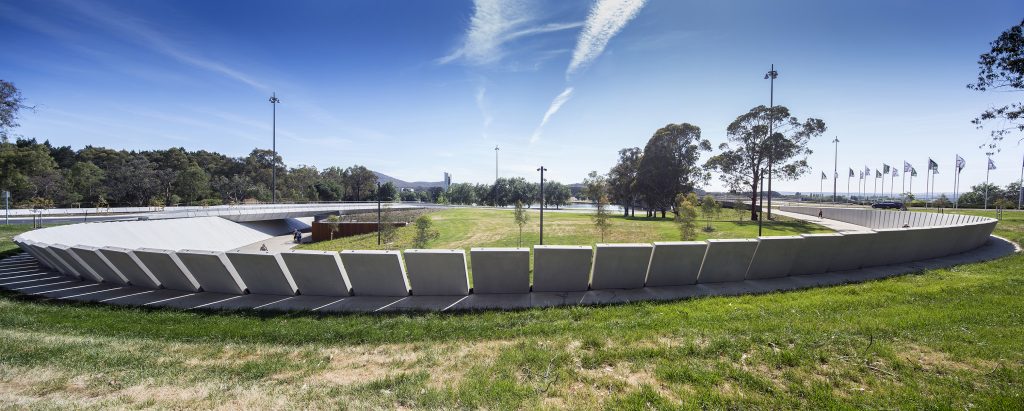
From homes to hotels – 2016 ACT Architecture Award winners – The night’s top honour, the Canberra Medallion, was awarded to the Bowen Place Crossing by Lahznimmo Architects in addition to the Sir John Overall Award for Urban Design. Read more.

Canberra Medallion – Bowen Place Crossing by Lahznimmo Architects. Photo by Brett Boardman.

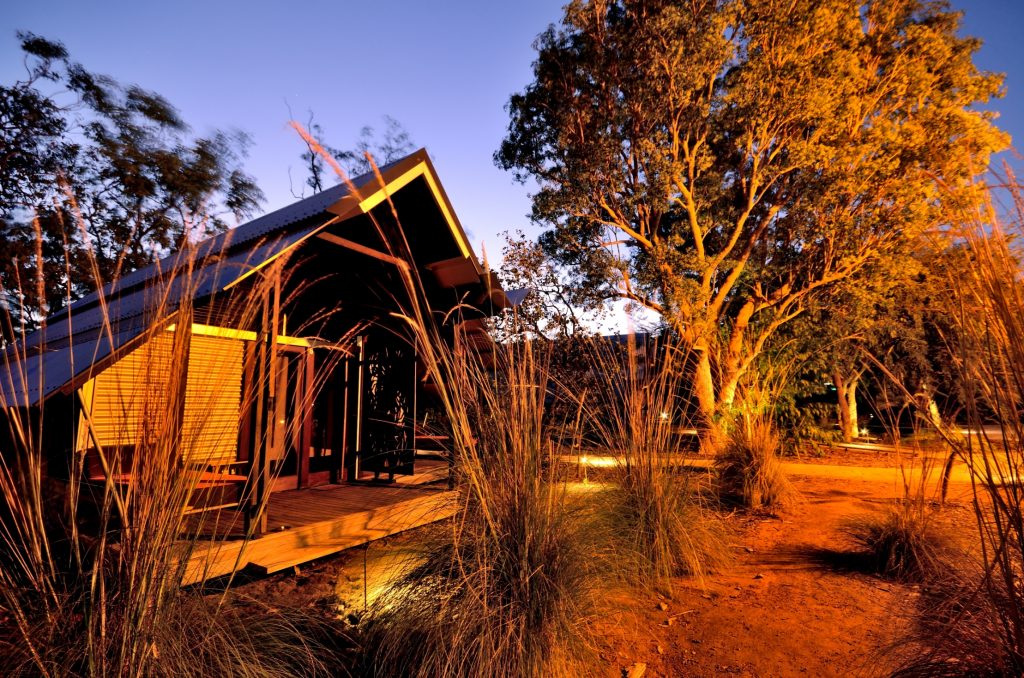
Community engagement rewarded at 2016 NT Architecture Awards – Community engagement was a strong theme across the winning projects particularly the overall winner of the night, Anbinik Kakadu Resort by Troppo Architects which received the Tracy Memorial Award and the Peter Dermoudy Award for Commercial Architecture. Read more.

The Tracy Memorial Award – Anbinik Kakadu Resort by Troppo Architects. Photo by David Haigh.

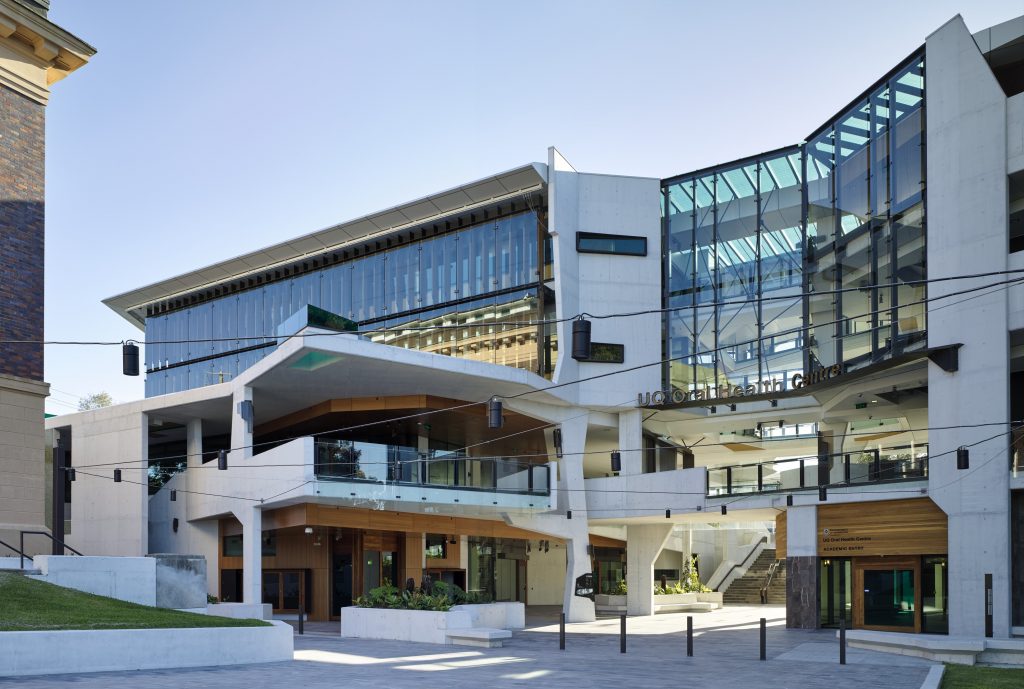
Sustainability, innovation and rejuvenation celebrated at Queensland Architecture Awards – Following an extensive Regional Architecture Awards program, 83 projects were vying for state honours. On the night, 48 projects shared 58 accolades – Named Awards, Awards and Commendations – with a number of projects receiving multiple mentions. Queensland’s global reputation as a research and innovation hub was evident with key university projects taking home top honours across a range of categories. Read more.

F D G Stanley Award - University of Queensland Oral Health Centre by Cox Rayner Architects with Hames Sharley and Conrad Gargett Riddel
F D G Stanley Award – University of Queensland Oral Health Centre by Cox Rayner Architects with Hames Sharley and Conrad Gargett Riddel. Photo by Christopher Frederick Jones.

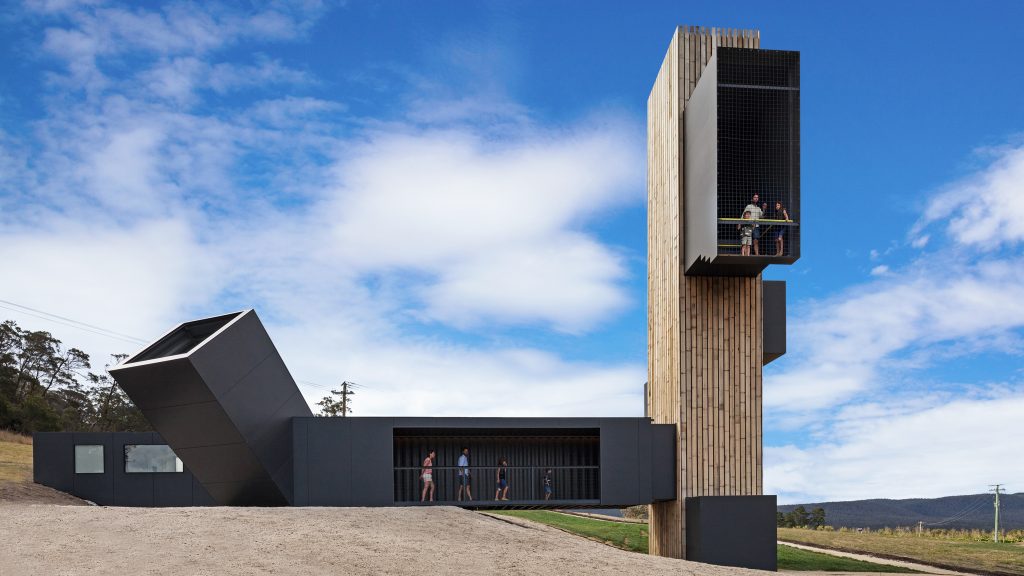
Tourism and community projects win at 2016 Tasmanian Architecture Awards – Tourism projects and community buildings were big winners at the Australian Institute of Architects’ 2016 Tasmanian Architecture Awards announced in Hobart tonight. 

This year’s awards demonstrate the important role that architecture plays in Tasmania’s booming tourism economy. Read more.

Colin Philp Award for Commercial Architecture - Devils Corner by Cumulus Studio. Photo by Tanja Milbourne.
Colin Philp Award for Commercial Architecture – Devils Corner by Cumulus Studio. Photo by Tanja Milbourne.

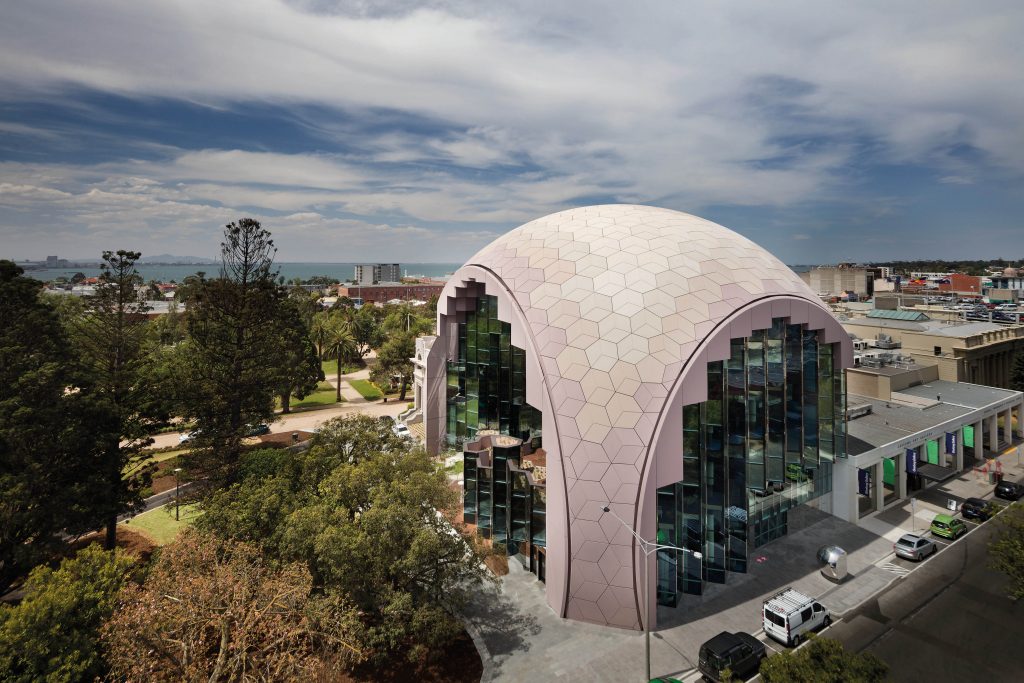
2016 Victorian Architecture Awards Winners Announced – Juries noted that a focus on community was evident in all categories, cleverly showcasing architecture’s ability to contribute to the public realm in a variety of positive and innovative ways. Vanessa Bird, Victorian Chapter President stated that it is ‘particularly heartening to see architects demonstrating a thinking beyond a specific site to produce benefits for the wider community.’ Read more.

Victorian Architecture Medal - Geelong Library & Heritage Centre by ARM Architecture. Photo by John Gollings.
Victorian Architecture Medal – Geelong Library & Heritage Centre by ARM Architecture. Photo by John Gollings.

From the National President

National President, Ken Maher. Photo by Brett Boardman

There are only two weeks remaining until the Federal Election. Earlier this month the Institute launched a campaign, Designing Australia’s Future, calling on members to join the Institute in challenging our political leaders to commit to meaningful change for Australia’s built environment. As part of this campaign we have written to the major political parties to get their position on the key policies the Institute advocates for. To date we have received a response from Labor and this has been added to our election campaign portal – Designing Australia’s Future.


Australian architects have a worldwide reputation for innovative design leadership and our profession is well placed to advise our Federal Government to address key challenges that we are facing in our towns and cities. Primary issues include climate change, housing affordability, an ageing demographic, increasing demand for efficient transport systems, and the need for more community and public infrastructure. Our population is projected to reach 30.5 million by 2030 and we need to develop long term strategies, policies and processes to create a sustainable built environment that can support this growth.


In urban areas we must address affordability through increased density, mass transit connectivity, walkability, and diversity in our housing. Addressing the geographic disconnect between jobs and homes, providing quality open space, protecting our heritage, and ensuring excellence in design are all key challenges. It is also critical to ensure that our rural and regional communities are connected to urban centres and have access to services.


Integrated strategies and policies across all levels of government are required. These will only be effective if supported by actions to ensure that what is delivered in physical form is enduring and of the highest design quality. Architecture and urban design are critical to delivering a built environment that can sustain Australia’s diverse communities into the future.


The Australian Institute of Architects expects the Federal Government to play an increasing role in shaping the cities we need by providing investment and strong leadership. The delivery of resilient towns and cities will only be achieved by ensuring rules and regulations are effective, valuing quality design, and above all expressing a compelling vision for an equitable future through design. Genuine and informed community engagement in this process is critical to success.
We call on the Australian government to address these challenges by:

  • Embracing Sustainable Communities
  • Addressing Climate Change
  • Committing to Quality
  • Delivering Housing Diversity
  • Fostering Creativity and Innovation


I have just returned to Australia from travel to the AIA Convention in Philadelphia, the 15th International Architecture Exhibition in Venice and a Boarding Pass event for International Chapter members in London.

In Philadelphia, I had the opportunity of speaking to presidents of other institutes from around the world, and outlining the challenges our organisation has faced and the progress we are making. It was refreshing to observe the level of interest in addressing climate change, the value of design, and the role of architecture as social agency.


I’d like to congratulate the whole team behind Australia’s Exhibition in Venice, The Pool led by Aileen Sage Architects (Isabelle Toland and Amelia Holliday) with Michelle Tabet, which opened at the end of last month. It was an exciting experience to be part of the event along with several hundred enthusiastic architects and other guests, and see this project come to fruition after two years of planning. The fine DCM pavilion has been transformed into a place of respite within the intensity of the Biennale, calming visitors through experience of reflection, light, space and water, within a distinctly Australian atmosphere. Visitors are also challenged through conversations permeating this space regarding the role pools play in society and how architecture can enrich lives and play a critical role in uniting communities.


On 9 June I participated in a Boarding Pass event in London where I updated attendees on the changes occurring with the Institute, and had the pleasure of announcing the winners of the 2016 International Chapter Architecture Awards. Australian architects are having considerable impact beyond our shores and I congratulate all winners and entrants.


Asia has been a significant growth area for Australian practices in recent years and it is exciting to see the quality and diversity of recently completed projects, including some of considerable scale. This is a testament to the talent and creativity of Australian architects in an increasingly international and competitive design arena.
Read more about the Awards here.

Job opportunity: Koning Eizenberg Architecture

Koning Eizenberg Architecture, an award-winning design firm in Los Angeles, is searching for an entry to mid-level candidate (2-3 years experience) to work on project teams in various stages of design with a focus on production drawings in Revit. The desired candidate will have skills and experiences that range from schematic design to construction documents. Minimum qualifications include strong technical and effective communication skills; experience developing designs; experience working with a team to produce working drawings with guidance. The following skills are a plus: experience working with multi-disciplinary teams for projects from $5M- $60M. The firm values design and is looking for candidates that share this interest and bring an ability to contribute to and realize design intentions.

Please email resume, portfolio and documentation of experience with above skills in an 8.5×11 PDF no larger than 5 MB to info@kearch.com with subject line ‘Designer’.

Governance proposal update

It’s almost the end of the consultation period for the proposed governance changes which will be considered at the AGM in May.

The period for members to provide feedback for consideration for the final form of the proposed changes closes tomorrow at 8pm AET.

You have until then to have your say at constitution@architecture.com.au.

There has been a request from the Institute’s Gender Equity Committee that there be specific rules requiring gender balance inserted into the Articles for appointments to the Board.

There’s no question over support for gender balance and we had intended to enshrine this aspiration in the respective National Council and Board Charters. Having considered the feedback however, we are now reviewing how this might be included in the revised Articles, as a mandatory requirement, in a manner that will deliver gender balance and still maintain an appropriately democratic process for appointments by the elected members on the National Council. We are consulting with the Gender Equity Committee and will advise the outcome of these deliberations when the final version of the proposed changes are issued to members in a couple of weeks.

Other responses so far have generally been positive. There have been a number of queries about the extent of National Council’s influence on the proposed Board.

It’s not legally possible for the National Council to dictate to the Board what it should do. However, we’ve put in a number of measures to make sure the Board is very aware of National Council’s priorities, suggestions, strategies and responses to member needs, as follows:

  • National Council elects all the Board members one way or another, and except for the president (who has already been ordained as the president-elect the year before) and the Immediate Past President, the other board positions come up for renewal every year.
  • The quorum, and make-up of the Board at its full capacity, prevent the National Councillors on the Board being outvoted by the independent members.
  • National Council will generate the Board’s Charter, nominating which kinds of matters it requires the Board to consult it about.
  • By separating the two so that the Board deals with the legal, compliance and other fiduciary matters, the National Council will have more time to concentrate on the things that matter for you, the members.


To those of you that have provided feedback already, thank you. For everyone else you can still have your say at constitution@architecture.com.au before 8pm AET tomorrow. We also encourage eligible members to vote at the AGM in person or by proxy.

2016 Membership Renewals Winners

2016 Membership Renewal Prize Winners Announced


Refund of 2016 Membership fee

J Arndt, Vic

M West, Qld

J Berryman, NT

B Zoontjens, SA

B Fenton, Tas


$100 book voucher

J Wohl, NSW

S Kwok, NSW

E Bell, ACT

X Carthew-Wakefield, Tas

E Dzinkic,  NSW


National Seminar Series Double Pass

G Wilson, NSW

K Kormendy, Qld

R Spencer, Qld

L Fretten, NSW

C Tierney, Vic


Continuum Pass

K J Mao, WA

R Ashford, NT

J Booth, SA

G Perlman, Qld

B Wray, Vic

G Keen, NT

S Harrison NSW

M Slavin, WA

K Campbell, SA

L Dicker, Vic


Congratulations to all the winners!

(Please note that all winners have been notified by telephone)

Architectural Tour Sri Lanka 2016

The following is a call for Expressions of Interest from one of our Retired members, it is not an endorsement from the Institute.


Perhaps Sri Lanka has not yet surfaced on your bucket list.  Sri Lanka, post war, is a very rapidly developing nation.  Three major ‘colonisations’ make for fascinating architectural emanations.  In discussions with the manager of the Geoffrey Bawa Trust in Colombo it surfaced that an architectural tour of Sri Lanka from England took place in 2009 to honour the anniversary of Geoffrey Bawa’s birth by visiting as many of his works as possible in the time they had.  An architectural and cultural tour of Sri Lanka is being crafted for Australian and New Zealand architects and those interested in architecture.

This tour however, whilst including many of Bawa’s works, will also include contemporary architecture and currently practising architects and their works.  A local guide with encyclopaedic knowledge will accompany throughout the tour.  Travel will be by air conditioned coach, and various accommodations will be in appropriate historic and contemporary hostelries.

I am seeking expressions of interest – no commitment just yet.  The Tour will take place in September 2016.    The itinerary is almost complete, and shortly costs will be known.  The duration is 16 days Colombo to Colombo.  Please contact me if you would like further information.  I can assure you of both an interesting and entertaining time in this vibrant, colourful island.  And it is affordable!

David M Breaden AIA
0418 170 311
davidbreaden1938@gmail.com

Institute focuses resources to provide more equitable benefits to members

The Australian Institute of Architects’ National Council has just announced a set of measures to adapt and concentrate the organisations resources following a review of the Institute’s business model.

Guided by the imperative that the Institute delivers equitable value to members, the profession and the community, National Council has agreed on amending the focus of the Institute’s resources on three core areas: membership services, advocacy and education.

In response to this streamlined strategy and ahead of the new year, National Council in consultation with stake holder representatives has outlined changes that include the closure of Architext bookstores in Melbourne and Sydney, and the closure of the Newcastle office.

‘These decisions have been difficult but are necessary and part of a broader change process that will ensure the best and most equitable use of the Institute’s resources. The provision of timely and relevant members’ services remains paramount to our focus with 2016 no doubt shaping up to be a challenging but rewarding year,’ National President Jon Clements said in communications to members, councillors and staff.

‘Many bricks-and-mortar retailers have been hit by online retail, but bookselling has been hit harder still with e-books and the internet radically changing the publishing industry. Architext has not been immune from these pressures and is no longer sustainable as a business.’

Architext will close its stores in Sydney and Melbourne on 31 March 2016. It is the end of an era, but the Institute is committed to ensuring that all of its members have equitable access to quality specialist books and publications. The organisation is currently exploring partnerships with select bookshops nationally. Contracts will be available online and from Chapter offices.

Newcastle and NSW Country Divisions operations, currently based in Newcastle, will relocate to the NSW Chapter offices.

‘The Divisions, its committees and members are passionate and engaged, and its initiatives and events perform well. However, while the office has provided valued services to the Divisions for many years, in the current climate we are unable to support the significant costs associated with running a stand-alone office. The relocation will take immediate effect. In addition, the activities provided by the two Newcastle-based staff will be absorbed by the NSW Chapter, which will lift its resources to cater to the extra requirements this change brings about.

‘National Council recognises the enormous support and commitment from the Division Committees in regional NSW. We acknowledge in particular the work of both Chairs, Sarah Aldridge and Debra McKendry-Hunt, who have been strong advocates for both Divisions. National Council is equally committed to ensuring that the 2016 planned regional programs continue with direct support from the NSW Chapter and wider Institute, Mr Clements said.